DOT vs ECE MTB Helmets: Key Differences Guide
Breadcrumb
What do DOT and ECE mean for MTB full-face helmets?
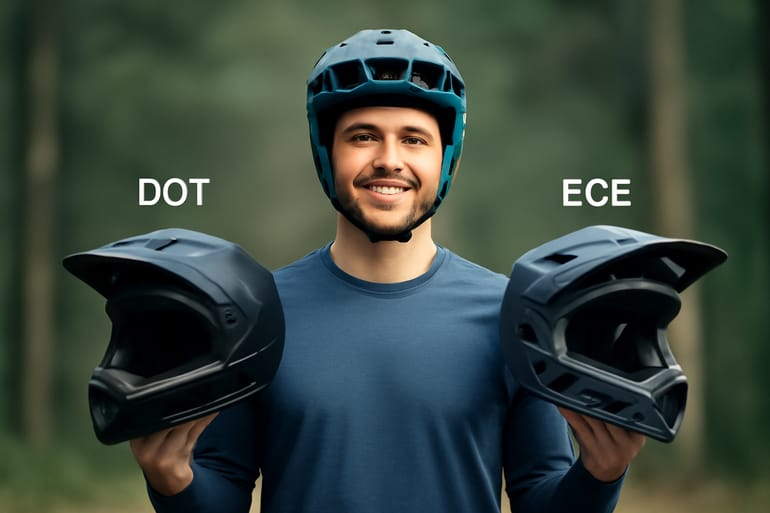
For riders comparing DOT vs ECE certification for mountain bike helmets, the first thing to know is that these labels do not play the same role in every riding category. DOT is a US road-helmet standard, while ECE is widely recognized for motorcycle helmets in Europe. In mountain biking, many full-face helmets are built around standards more closely tied to pedal-powered impact scenarios, ventilation, and lower overall weight.
That matters because a helmet can look aggressive and protective without being the right match for your actual use. A downhill rider spending full days on technical descents has different needs from a sport bike rider crossing over into off-road use. A beginner rider may also assume that a road-oriented certification automatically means "safer," when the real answer depends on how and where you ride.
A practical way to think about it is this:
- DOT focuses on motorcycle-style road use
- ECE is generally seen as a more current motorcycle benchmark in many markets
- MTB full-face helmets are often designed around off-road riding priorities
- Fit, coverage, weight, airflow, and intended terrain still matter as much as the label
If you're still narrowing down helmet styles, full-Face MTB Helmet Buying Guide gives useful context on when a full-face design makes sense and what separates trail, enduro, and downhill options.
How are DOT and ECE standards actually different?
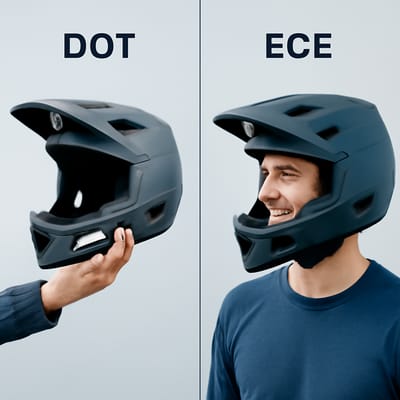
The biggest difference between DOT and ECE is not just geography. It is the testing philosophy and the kind of helmet category they are primarily meant to govern. DOT certification is commonly associated with self-certification for road motorcycle helmets sold in the US. ECE certification is tied to a regulated approval framework used widely across Europe, including the UK motorcycle market.
For buyers, that leads to a few meaningful distinctions:
DOT
- Built around motorcycle-road expectations
- Common on heavier full-face road helmets
- Often less relevant for pedal-focused MTB designs
ECE
- Strong relevance for motorcycle riders in the UK and Europe
- Commonly viewed as a more current point of comparison for motorcycle helmet approval
- More likely to appear on helmets meant for powered riding contexts
Why that matters for MTB riders
A dedicated downhill or enduro helmet may prioritize light weight, breathability, and extended low-speed technical comfort in a way a motorcycle helmet does not. That is why a mountain bike rider should not automatically chase a DOT or ECE sticker without checking the intended use.
For riders comparing shell design, chin bar shape, visor function, and airflow, top Features for MTB Full-Face Helmets helps connect certification questions to real riding performance instead of treating the sticker as the whole story.
Should you choose a DOT or ECE helmet for mountain biking?
In most cases, a dedicated mountain bike full-face helmet is the better choice for mountain biking than a road motorcycle helmet carrying DOT or ECE approval. The reason is simple: mountain biking demands more pedaling comfort, better ventilation, lower neck strain, and a field of vision that works on steep terrain. A heavy motorcycle lid can feel protective at first touch, but on a long climb or technical off-road session it may become tiring, hot, and awkward.
That said, context matters. A sport bike rider who occasionally rides off-road on powered terrain may still need a helmet built for that category, where ECE can be highly relevant in the UK. An off-road rider using lifts, bike parks, and gravity-focused trails will usually benefit more from an MTB-specific full-face design than from chasing a motorcycle standard alone.
Use this quick comparison:
| Riding scenario | Better direction |
|---|---|
| Pedal-assist trail riding | MTB full-face helmet |
| Downhill park laps | MTB full-face helmet |
| Mixed road motorcycle use | ECE motorcycle helmet |
| Pure sport bike road riding | ECE or road-legal category helmet |
For non-brand shoppers, the safest buying habit is to verify the intended use, certification label, retailer credibility, and fit details before checkout. That is also where how to fit MTB Full-Face Helmets: Sizing and Comfort becomes valuable, because the wrong fit can undermine even a well-certified helmet.
What should UK buyers check before trusting a certification label?
A certification mark only helps if it is genuine, relevant, and attached to the right helmet category. UK buyers should slow down when a listing uses broad phrases like road approved, race ready, or maximum protection without showing clear standard information. This is especially important for beginner riders and non-brand shoppers, who may be comparing unfamiliar listings where marketing language is stronger than the product data.
Before you buy, check these points:
- Read the product description carefully. It should state the helmet's intended riding category clearly.
- Look for a visible standard reference. A trustworthy listing should not hide the exact certification.
- Check weight and ventilation details. If the helmet seems unusually heavy for MTB use, it may be built for another purpose.
- Review sizing guidance and return policy. A poor fit is a practical safety issue.
- Inspect photos of labels and interior tags. Serious sellers usually provide them.
- Compare with known MTB feature expectations. Large vents, goggle compatibility, and trail-ready comfort are useful clues.
Once the helmet arrives, inspect straps, liner quality, shell finish, and labeling before your first ride. Ongoing care matters too, because damaged foam, worn pads, or unnoticed impacts can shorten safe lifespan. For that reason, maintenance and Longevity of MTB Full-Face Helmets is worth reading before you commit to regular use.
How do certification, fit, and features work together?
The best helmet choice happens where certification, fit, and ride-specific features overlap. Certification tells you the helmet passed a defined test framework. Fit tells you whether that protection will stay stable and work as intended. Features shape whether you will actually want to wear it for the kind of riding you do.
A useful buying checklist looks like this:
Start with intended use
Choose an MTB full-face for downhill, enduro, bike park, and aggressive trail riding. Choose a motorcycle-category helmet only when your riding use truly requires that class.
Confirm fit before anything else
Your helmet should feel snug around the crown and cheeks without creating pressure points. The chin bar should not interfere with breathing or visibility. If sizing is unclear, how to Fit MTB Full-Face Helmets: Sizing and Comfort can save you from a costly mistake.
Match features to terrain
Look for:
- Ventilation for long climbs and warm conditions
- Secure retention for rough descents
- Goggle compatibility for gravity riding
- Washable padding for frequent use
- Low enough weight to avoid fatigue
For affiliate-style comparisons, this is the point where product pages become useful: compare weight, vent count, removable liners, safety labeling, and return terms side by side before adding anything to your basket. If you want the wider buying framework first, full-Face MTB Helmet Buying Guide ties those decisions together in a rider-friendly way.
Frequently asked questions about DOT vs ECE MTB helmets
Is DOT certification enough for a mountain bike full-face helmet?
Not by itself. DOT is a motorcycle-road standard, so it does not automatically mean a helmet is the best choice for mountain biking. You still need to check whether the helmet is designed for MTB use, proper ventilation, and all-day riding comfort.
Is ECE better than DOT for UK riders?
For motorcycle use in the UK, ECE is generally more relevant because it aligns with the European approval landscape. For mountain biking, though, the more important question is whether the helmet is purpose-built for off-road pedal or gravity riding rather than road motorcycling.
What should beginner riders prioritize first?
Beginner riders should focus on fit, intended use, and retailer trust before getting lost in certification jargon. A helmet that fits properly and matches your riding style is usually a better decision than choosing the most aggressive-looking shell.
Are motorcycle-certified helmets good for off-road riders?
They can be appropriate for powered off-road use, but not always for pedal-powered mountain biking. Off-road riders doing downhill MTB or enduro usually need lighter helmets with better airflow and movement than a typical motorcycle helmet provides.
How can non-brand shoppers avoid fake or misleading certification claims?
Stick to reputable sellers, read the full specification, and check for clear photos of labels and interior tags. If a listing uses vague safety language without naming the exact standard, treat that as a warning sign.
Does a more protective-looking helmet always mean safer performance?
No. Bulkier shells can add weight and reduce ventilation, which may hurt comfort and stability during real rides. Safer performance comes from the right combination of certification, design purpose, fit, and condition.
Should sport bike riders buy the same helmet for road and MTB use?
Usually no. Sport bike riders often benefit from one helmet for road riding and another for mountain biking, because the demands are different. A single compromise helmet rarely feels ideal in both environments.