Motorcycle Helmets: UK Types, Fit, and Safety Guide 2026
Breadcrumb
Motorcycle helmets in the UK: how to choose with confidence
Motorcycle helmets are one of the few purchases where comfort, price, and performance all matter, but protection is the non‑negotiable. If you ride in the UK, you’re also dealing with real-world conditions that make “one perfect helmet” unlikely: cold mornings, rain, visor fogging, and long motorway stints mixed with slower urban riding.
Beginners often get stuck on the first decision, like “full‑face or open‑face,” without knowing what actually changes safety and comfort. Safety‑conscious riders want straightforward ways to evaluate certifications and impact features without getting buried in product-page claims. UK shoppers comparing options and prices want to avoid false economies, like buying a cheap helmet that’s noisy, uncomfortable, and replaced quickly.
This cornerstone page gives you the big picture: helmet types, what to look for in safety markings, how fit should feel, why materials matter, and a buying framework that works whether you’re commuting, touring, or mixing in off-road riding.
To explore helmet categories in more detail, start with helmet Styles, which breaks down the main types and how they match different riding scenarios.
Helmet types and styles: what’s the real difference?
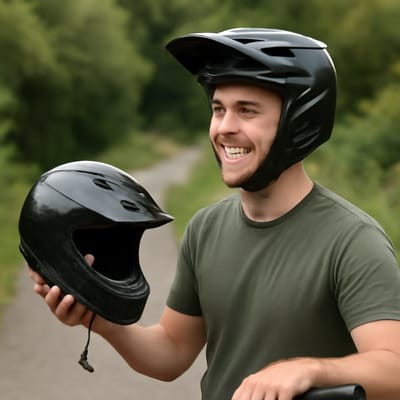
Helmet “style” is a shorthand for coverage and intended use. The best choice depends on your speed, environment, and how much comfort you need to keep the helmet on properly.
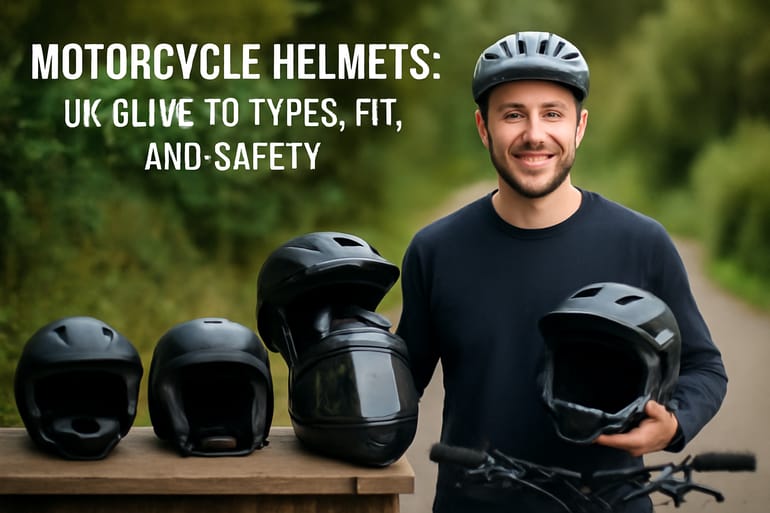
Common motorcycle helmet styles
- Full‑face: the default for many riders because it offers the most complete coverage, including chin protection.
- Modular/flip‑front: convenience for stops and comms, but you should pay attention to locking feel and overall fit.
- Open‑face: more airflow and a wider “open” feel, but less facial protection.
- Off-road / motocross style: designed for goggles and peak visors; works best when paired with the right eye protection.
Why style impacts buying decisions
Comfort features like ventilation and noise control are often linked to style, but so is stability at speed. A helmet that feels fine in a shop can lift, whistle, or create pressure points on a 60-minute ride.
If you’re choosing for mixed riding, such as e‑bike MTB crossovers or trail-centre days combined with road riding, style choice becomes even more personal. Upcoming guides in this content area will cover topics like MTB E‑Bike Helmet Styles: Full‑Face vs Open‑Face for Downhill and Goggle Compatibility and Visor Fit for MTB Helmets to help you dial in those edge cases.
For a broader breakdown by use case, helmet styles is the best next step.
Safety standards and impact protection: how to read helmet claims
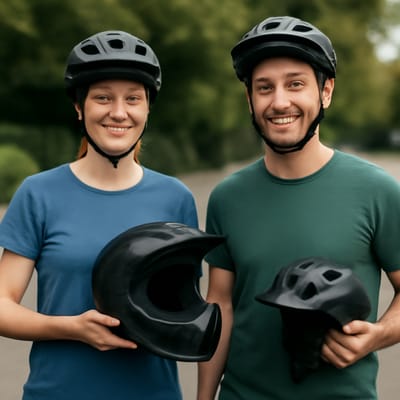
Safety language can sound similar across brands and retailers, so it helps to separate three things: certification, design features, and fit.
Certification (the baseline)
A legitimate certification means the helmet has passed defined tests under a specific standard. In the UK market, you’ll typically see clear markings on the helmet itself and in documentation. If a listing is vague about what standard applies, treat that as a reason to pause.
Impact features (the differentiators)
Modern helmets may include features intended to manage different impact types, including rotational forces. These features can be valuable, but they don’t replace the basics: correct size, stable fit, and a properly fastened strap.
Fit (the multiplier)
A helmet that shifts on your head can expose areas you assumed were protected. That’s why a well-fitting mid-range helmet can be a better real-world choice than a premium model you wear too loose because it’s uncomfortable.
Deeper explanations are coming in Safety Standards Explained: CE EN 1078, ANSI, and UK Compliance and MIPS and Other Impact Protection Technologies Demystified. Until then, shop with a simple rule: confirm certification, then prioritise fit and stability before chasing extra features.
Fit, sizing, and comfort: the checks that prevent expensive mistakes
Fit is where most buying regret starts. A helmet can be “the right size” on paper and still be wrong for your head shape.
A quick fit check you can do at home
- Put the helmet on so it sits level and low enough to protect your forehead.
- Tighten the retention system until it’s snug, not painful.
- Buckle the strap and adjust so you can fit two fingers under it, but no more.
- Try to roll the helmet forward and back with your hands. It shouldn’t move much.
- Wear it for 10–15 minutes indoors. Any hotspot usually gets worse on the road.
Comfort factors that matter in UK conditions
- Ventilation and moisture management: sweaty pads lead to slipping.
- Noise levels: wind noise increases fatigue on longer rides.
- Visor and eye-port fit: fogging and poor sightlines are safety issues, not just annoyances.
Beginners should prioritise a helmet that’s easy to adjust correctly every time. Safety‑conscious riders should treat stability as part of safety, not a comfort preference. UK shoppers comparing prices should remember that comfort is what makes a helmet wearable, and wearability is what makes protection consistent.
A dedicated guide, How to Choose a Helmet That Fits MT Biking & E‑Bike Sessions, will go deeper into measuring, head shapes, and strap geometry.
Materials and construction: what you’re paying for (and what you’re not)
Helmet pricing often climbs fast when you move into premium shells and lighter builds. Sometimes that extra cost is worth it. Sometimes it’s just a costly way to buy the wrong helmet.
What construction choices usually affect
- Shell material and layup: can influence weight, stiffness, and how the helmet holds up to everyday knocks.
- EPS liner density and design: affects how impacts are managed.
- Retention and hardware quality: determines whether the helmet stays stable over time.
Where carbon fibre fits in
A carbon fibre shell can reduce weight and feel more “solid” at speed, which some riders love for touring or repeated high-speed use. However, shell material alone doesn’t guarantee better protection. If carbon fibre pushes you into a helmet that fits worse, it’s not a smart upgrade.
A value-first way to compare
- Buy the best fit and stability you can.
- Prioritise ventilation, noise control, and liner quality for your typical ride length.
- Treat premium materials as the final filter.
This approach is especially useful for UK shoppers who see large price spreads online and want a rational way to shortlist without chasing specs that don’t translate into comfort or safety.
Buying guide: match the helmet to your riding and budget
A good buying process keeps you from bouncing between extremes. Start with riding type, confirm safety, then choose the features you’ll actually use.
Step-by-step buying framework
- Define your main use: commuting, touring, weekend twisties, track days, or mixed riding.
- Choose a style that matches that use (coverage and practicality first).
- Confirm certification and authenticity (markings on the helmet, reputable sellers).
- Dial in fit: size, head shape compatibility, stable strap setup.
- Add practical features: visor performance, ventilation, comms compatibility, and liner upkeep.
Typical UK price tiers (how to think about them)
- Entry-level: can be fine if certified and it fits well, but comfort may be basic.
- Mid-range: often the best balance of comfort and long-term wearability.
- Premium: pays for lower weight, refined noise control, and higher-end materials.
If you’re comparing models, focus on the few details that change daily life: noise, fogging, hotspots, and how stable the helmet feels at speed. That’s where “cheap” becomes expensive.
For a broader overview of helmet types and scenarios, helmet Styles helps you narrow down what to shop for before you get into model-by-model comparisons.
FAQ: Motorcycle Helmets
What’s the safest motorcycle helmet style for most riders?
A full‑face helmet is often the safest all-round choice because it offers the most complete coverage, including chin protection. The best option for you still depends on correct fit, stable straps, and riding conditions.
What should beginners look for when buying their first motorcycle helmet?
Prioritise certified protection, a snug and stable fit, and comfort you can tolerate for the length of your typical rides. Avoid buying purely on looks, and don’t assume the most expensive helmet will fit your head shape.
How can safety‑conscious riders verify a helmet meets a real safety standard?
Check for clear certification markings inside the helmet and confirm the model name matches the documentation from the manufacturer or retailer. Be cautious of vague listings that say “approved” without naming a standard.
How do UK shoppers compare helmet prices without overpaying?
Compare helmets within the same style and quality tier, then use fit and comfort as tie-breakers. Spending more makes sense when it improves everyday usability, like noise control, ventilation, and liner quality.
Are carbon fibre helmets always better?
Not always. Carbon fibre can reduce weight and feel premium, but it doesn’t automatically guarantee better protection or a better fit. A well-fitting helmet in a different material can be the smarter purchase.
How often should I replace my motorcycle helmet?
Replace it after any significant impact, even if damage isn’t visible, and follow the manufacturer’s guidance for age and wear. Also replace it if the retention system, straps, or liner components can’t keep the helmet stable.
What helmet topics matter for e‑bike MTB and downhill riders?
Style choice, coverage, goggle/visor pairing, and clear safety guidance matter most when speeds and terrain increase. Upcoming guides will cover MTB E‑Bike Helmet Styles: Full‑Face vs Open‑Face for Downhill and other MTB/e‑bike-specific fit and safety topics in more detail.