CE EN 1078 vs ANSI: UK Helmet Compliance Guide 2026

Breadcrumb
What do CE EN 1078, ANSI, and UK compliance actually mean?
Safety Standards Explained: CE EN 1078 and ANSI are not just acronyms on a sticker. They are shorthand for test methods and minimum performance thresholds that help you judge whether a helmet is appropriate for the riding you do in the UK.
The UK baseline: CE + EN 1078
For most bicycle-style helmets sold for cycling in Great Britain, you’ll commonly see a CE mark paired with EN 1078. In plain terms, EN 1078 is the European standard for helmets used for cycling, skateboarding, and roller skating. It focuses on core requirements like shock absorption (impact testing), retention system strength (strap and buckle), and field of vision.
Where ANSI fits in
ANSI standards are most common in the US market. Seeing “ANSI” on a listing doesn’t automatically make a helmet better or worse for UK use. The key is whether the helmet also meets a recognised cycling standard for the UK/EU market (often EN 1078) and whether it suits your riding risks.
Why this matters for MTB and e-bikes
A commuter e-bike helmet and a downhill-ready MTB helmet can both be “safe,” but built around different crash expectations. Before you compare standards, it helps to be clear on style and coverage, which mTB E‑Bike Helmet Styles: Full‑Face vs Open‑Face for Downhill breaks down in practical terms.
For beginners, think of standards as the entry gate. For safety-focused riders, they’re a filter to remove sketchy options. For UK shoppers, they’re also a way to sanity-check marketplace listings before you spend money.
CE EN 1078 explained: what it tests, and what it doesn’t

If you’re buying for MTB or e-bike riding in the UK, EN 1078 is the standard you’ll see most often on cycling helmets. It’s useful, but it’s also easy to misunderstand.
What EN 1078 is designed to cover
EN 1078 testing typically includes:
- Impact absorption against defined anvils at set speeds (to limit transmitted force)
- Retention system strength so the helmet stays on in a crash
- Strap slippage and buckle performance
- Coverage and field of vision requirements
That baseline is valuable for everyday riding, trail centres, and mixed-use e-bike sessions where your speed is assisted but the helmet category is still “cycling.” It also helps UK shoppers comparing options and prices, because it gives you a consistent minimum bar across brands and retailers.
What EN 1078 doesn’t guarantee
EN 1078 is not a promise of invincibility, and it doesn’t automatically mean a helmet is ideal for high-consequence downhill:
- It doesn’t certify a helmet for every type of impact scenario you might imagine.
- It doesn’t tell you how well a helmet manages rotational forces (that’s where technologies like MIPS come into play).
- It doesn’t decide whether you need open-face or full-face coverage for your terrain.
If you’re a safety-conscious rider, treat EN 1078 as a starting point, then evaluate coverage, retention quality, and construction. Downhill riders often prioritise chin protection and additional coverage; the style trade-offs are clearer in mTB E‑Bike Helmet Styles: Full‑Face vs Open‑Face for Downhill.
Practical buying takeaway
Use EN 1078 to rule out non-compliant listings, then decide based on your riding intensity, fit, and the features that prevent the helmet from shifting at the moment you need it most.
ANSI vs CE EN 1078: how to compare without getting misled
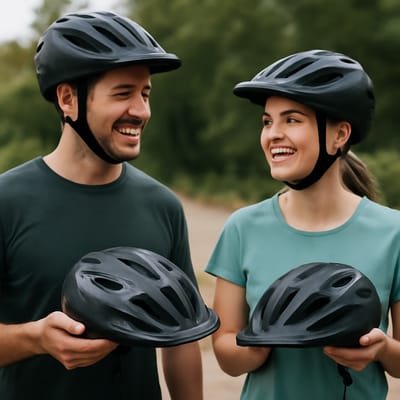
It’s common to see helmets advertised with ANSI language on global marketplaces, especially when the product is aimed at US buyers. The trap is assuming ANSI automatically replaces UK/EU expectations.
The real comparison: standard + market + intended use
Instead of asking “ANSI or EN 1078?”, ask:
- Is the helmet certified for cycling use where you live and buy? In the UK, EN 1078 with a CE mark is the common signal for bicycle-style helmets.
- Is the certification claim specific? Legit listings name the exact standard (for example, EN 1078) rather than vague lines like “meets international standards.”
- Does the helmet match your riding risk? A beginner doing canal paths has different needs than someone taking uplift days on rough descents.
What to do when a helmet shows ANSI only
If a listing only mentions ANSI and doesn’t clearly state EN 1078 (or another recognised cycling helmet standard for your market), you should be cautious. For UK shoppers comparing helmet options and prices, this is a red flag because you can’t easily verify what was tested and to what threshold.
Style and certification should agree
A common mismatch is a “downhill” helmet description paired with unclear or irrelevant standard claims. Start by confirming the helmet style is right for your riding. Then check the labels and documentation. If you’re deciding between a full-face and open-face setup for downhill-focused MTB or e-bike riding, the decision logic in mTB E‑Bike Helmet Styles: Full‑Face vs Open‑Face for Downhill helps you align coverage with the kind of crashes you’re actually trying to protect against.
Quick rule for safety-focused riders
Treat ANSI as “additional context,” not a replacement for UK-relevant certification. If the seller can’t provide a clear standards statement, move on. You’ll never regret buying clarity when the stakes are your head and jaw.
How to verify UK compliance on a helmet (labels, docs, and red flags)
Knowing the standard is one thing. Verifying it on the exact product you’re buying is where many people slip up, especially when prices look unusually good.
What to check on the helmet and packaging
Look for:
- A CE mark and a reference to EN 1078 on the helmet label, packaging, or included leaflet
- The manufacturer name and model (not just a generic brand badge)
- A batch/production reference or traceability info
- Clear size marking and fitting instructions
What to check in the listing before you buy
UK shoppers comparing helmet options and prices can quickly reduce risk by scanning for:
- Specific standard wording like “EN 1078” rather than “CE approved” with no standard listed
- Close-up photos of the inside label (not just glamour shots)
- A clear returns policy and UK-based support channel
Common red flags
- Misspelled standards (for example, “EN-1078 certified” with inconsistent formatting and no label photo)
- Claims that mix unrelated categories (“motorcycle-grade protection” on a bicycle helmet listing)
- Suspiciously low prices with no traceability details
Beginners: a simple checklist
If you’re new to MTB or e-bikes, you don’t need to memorise standards. Use this order:
- choose the right helmet style for your riding, 2) verify EN 1078/CE info, 3) confirm fit and retention feel.
And remember: compliance doesn’t equal comfort. A compliant helmet that rocks on your head or rides up exposes you. Fit and stability are what make the standard meaningful in the real world.
Which standard should you prioritise for MTB and e-bike riding?
The best standard to prioritise is the one that matches your actual use case, sold through a channel where the claim is verifiable. In the UK, that usually means starting with CE EN 1078 for cycling helmets, then choosing the right coverage and features for your terrain.
A practical decision framework
Use this quick filter:
- Mixed-use e-bike + light trails: Prioritise EN 1078 compliance, strong retention, good ventilation, and a stable fit at speed.
- Trail riding with occasional jumps: EN 1078 plus features that improve real-world stability (secure retention, grippy padding, good rear coverage).
- Downhill-focused riding: Start with the right helmet type (often full-face for many riders), then verify the compliance details and build quality. The style trade-offs are spelled out in mTB E‑Bike Helmet Styles: Full‑Face vs Open‑Face for Downhill.
Where safety tech and construction come in
Standards are minimums; design is where helmets differ. Shell construction, liner design, and rotational-impact systems can change how a helmet behaves in a crash. If you’re the rider who compares certifications line by line, you’ll also want to look at rotational protection discussions (for example, MIPS-type systems) and how they’re implemented.
Buying guidance without brand hype
At a given budget, prioritise: verified compliance claims, solid retention hardware, and a fit that doesn’t move when you shake your head. If two helmets both meet EN 1078, the one that fits your head shape better is often the safer choice because it’s more likely to stay correctly positioned.
That’s the core “product research” mindset: standards get you to the shortlist; fit and intended use decide the winner.
FAQ: CE EN 1078, ANSI, and UK helmet compliance
Is CE EN 1078 required for MTB and e-bike helmets in the UK?
It’s the most common cycling helmet standard you’ll see for products sold as bicycle helmets in the UK market. While rules vary by context, EN 1078 + CE marking is a practical baseline for verifying a helmet is built and sold as a compliant cycling product.
Does ANSI certification mean a helmet is legal or compliant in the UK?
Not necessarily. ANSI is typically associated with US standards, and it doesn’t automatically confirm the helmet meets UK/EU cycling helmet expectations like EN 1078. Treat ANSI as additional information unless the helmet also clearly states EN 1078 compliance.
I’m a beginner—what’s the simplest way to choose a safe helmet?
Start with a helmet that clearly states CE EN 1078 on the label or documentation, then focus on fit and stability. A helmet that shifts easily can reduce protection even if it’s compliant, so adjust straps and retention until it feels locked-in.
What are the biggest red flags when shopping online in the UK?
Vague phrases like “CE approved” without naming EN 1078, no photos of the inside label, and missing manufacturer details are common warning signs. If the listing can’t show or state the exact standard, it’s safer to choose another seller.
How should safety-conscious riders evaluate helmets beyond the standard?
Use the standard as the minimum, then assess retention quality, coverage, and how securely the helmet stays in position during movement. Also consider rotational-impact features and how the helmet’s shape matches your head, since stability affects real-world protection.
Do I need a full-face helmet for downhill e-bike or MTB riding in the UK?
It depends on your terrain, speed, and crash risk tolerance, but many downhill riders prefer the added jaw and facial coverage of full-face designs. Align the helmet type with your riding style first, then verify compliance and fit.
How can UK shoppers compare prices without compromising on compliance?
Compare like-for-like by confirming the same standard claim (for example, EN 1078), similar coverage, and similar feature sets before looking at price. If a deal is far below typical pricing and the compliance info is unclear, assume the risk is in what you can’t verify.