Full‑Face vs Open‑Face MTB E‑Bike Helmets: 2026
Breadcrumb
Full‑Face vs Open‑Face for Downhill: what changes on an e‑MTB?
Choosing between a full‑face and an open‑face MTB e‑bike helmet for downhill is less about fashion and more about speed, impact risk, and how long you’ll actually keep it on. On an e‑MTB, you often arrive at descents less fatigued, but you also tend to carry more speed and ride longer laps. That makes protection, heat management, and comfort feel higher-stakes than on a short pedal-only session.
For beginner riders, the decision usually comes down to confidence: a full‑face can feel reassuring when you’re still learning body position and braking. Safety‑conscious riders often focus on coverage around the jaw and temples, plus modern rotational-impact features. UK shoppers comparing options and prices usually need a clearer trade-off: extra coverage and chin protection versus lower weight and better airflow.
At a practical level:
- Full‑face helmets add a chin bar and more coverage around cheeks and back of head.
- Open‑face helmets are lighter, cooler, and quicker to live with on mixed rides.
- Some riders split the difference with a “convertible” setup, but the details matter (more on that below).
If your downhill is steep, rocky, bike‑park style, or you ride at higher assisted speeds, you should treat this as protective equipment first, comfort second, and aesthetics last.
How much protection do you really gain with a full‑face helmet?
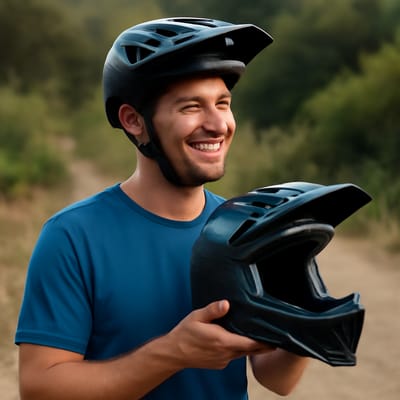
A full‑face helmet’s headline benefit is obvious: chin and jaw protection. But for downhill crashes, the bigger picture is extended coverage and stability when you hit the ground at awkward angles.
Where full‑face helps most
- Face and dental injuries: the chin bar can prevent direct impacts that an open‑face can’t address.
- High-speed tumble scenarios: more shell coverage can reduce lacerations and help manage multi-point impacts.
- Rough terrain and bike‑park riding: repeated exposure to rocks, roots, and hardpack raises the “consequence” of mistakes.
Where open‑face can still be a smart choice
Open‑face helmets can be perfectly appropriate for many UK riders who do downhill sections but spend most of the day climbing, linking trails, or riding mellow descents. The key is matching the helmet to your most consequential riding, not your average minute.
A quick UK buying reality check
Full‑face helmets generally cost more because you’re buying more material, more structure, and often more complex venting. If you’re price comparing, don’t compare a premium open‑face to an entry-level full‑face and assume they perform the same. Compare within a similar quality tier, then decide whether the added protection matches your risk and terrain.
Safety-conscious riders should also pay attention to the helmet’s stated intended use (trail/enduro/downhill), not just the silhouette.
Comfort trade-offs: heat, weight, glasses, and long UK rides
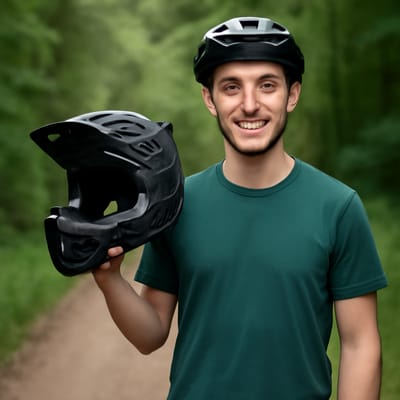
The most protective helmet is the one you’ll actually wear correctly for the entire run. Downhill on an e‑MTB can mean less climbing effort, but it can also mean longer days and more laps, so comfort problems compound.
Ventilation and heat
- Open‑face helmets usually win on airflow and feel less claustrophobic in humid UK summer conditions.
- Full‑face helmets vary a lot: some are impressively ventilated, others feel like a hotbox at low speed.
Weight and neck fatigue
A heavier helmet can increase neck fatigue on repeated descents, especially if you’re not used to it. Beginners often notice this quickly when learning to keep eyes up and head stable. If possible, try a full‑face on for 10–15 minutes, then mimic riding posture to see if pressure points develop.
Fit with glasses and pads
If you ride with glasses, check temple pressure and whether you can put glasses on and off without fighting the cheek pads. For riders who sweat heavily or do frequent wet-weather rides, removable/washable liners are a quality-of-life upgrade.
Noise and communication
Full‑face helmets can be louder with wind at speed or quieter depending on padding and fit. If you ride with friends or coaching groups, test whether you can hear instructions clearly.
Goggle and visor pairing is a major part of comfort and safety on steep descents, and it’s worth giving dedicated attention when you choose your setup.
Downhill decision guide: which style should you buy in the UK?
If your goal is to buy confidently, decide based on your hardest riding, then narrow by fit and budget.
Step 1: Match helmet style to your downhill “consequence”
- Bike park / uplift / very steep tech: lean full‑face.
- Enduro-style trails with occasional steep chutes: consider your speed and crash history; many riders still choose full‑face for confidence.
- Trail riding with short, moderate descents: an open‑face can be practical and still protective when properly certified and fitted.
Step 2: Use a comparison checklist (features that matter)
| Feature | Full‑Face | Open‑Face |
|---|---|---|
| Chin/jaw protection | High | None |
| Cooling on climbs | Medium–Low | High |
| Weight | Higher | Lower |
| Ease of putting on/off | Medium | High |
| Best for frequent park laps | Strong fit | Mixed |
Step 3: Consider UK pricing and value
- Entry-level: good open‑face options are usually cheaper than good full‑face options.
- Mid-range: often the sweet spot for venting + comfort upgrades.
- Premium: you’re typically paying for lighter builds, better liners, and refined airflow.
Step 4: Don’t skip standards and fit
If you’re the type to double-check certifications, you’re right to do it, but remember: even the best-rated helmet can underperform if it’s loose, sits too high, or is worn with straps too slack.
Finally, if you’re comparing models online, look for clear return policies so you can test fit at home without being stuck with pressure points.
Should you consider a convertible helmet for e‑MTB downhill?
Convertible helmets (removable chin bar) sound like the perfect compromise: open‑face comfort for climbs, full‑face coverage for descents. They can be a great solution, but only if you’re honest about how you ride and how often you’ll actually switch modes.
When convertibles make sense
- You do mixed UK rides with long linking sections and a few high-consequence descents.
- You want one helmet for travel, trail centres, and occasional bike-park days.
- You’re a UK shopper trying to avoid buying two helmets, but you still want chin protection when things get steep.
Where convertibles can disappoint
- They can feel heavier than a comparable open‑face.
- Not all chin bars feel equally solid, and fit can change between modes.
- Venting can be a compromise versus a purpose-built downhill full‑face.
What to check before buying
- How the chin bar locks: it should feel secure with no rattle.
- Whether the helmet stays stable when you shake your head vigorously.
- Whether you can stow or carry the chin bar easily (or if it becomes a hassle).
If you’re a beginner building skills, a convertible can be a confidence booster. For dedicated park riding, many riders still prefer a purpose-built full‑face for consistent fit and feel.
FAQ: MTB E‑Bike Helmet Styles for Downhill
Is a full‑face helmet safer than an open‑face for downhill?
In most downhill crash scenarios, a full‑face offers more protection because it adds chin and facial coverage and typically extends coverage around the head. That said, correct fit and proper strap tension still matter as much as the style.
What should a beginner choose for e‑MTB downhill riding?
If you’re new to steep descents or bike parks, a full‑face often helps because it reduces the consequences of common early mistakes and can boost confidence. If most of your riding is mellow trail with short descents, an open‑face may be easier to wear consistently.
Which helmet style is cooler for UK summer riding?
Open‑face helmets usually ventilate better and feel less restrictive on climbs and humid days. Some full‑face models are well-vented, but they still tend to run warmer at low speed.
How do I check if a helmet fits correctly before I buy in the UK?
The helmet should sit level, cover the back of your head, and feel snug without painful pressure points. The straps should form a “V” around your ears and be tight enough that the helmet doesn’t move when you open your mouth.
Do safety certifications matter more than helmet style?
Both matter. Certifications help ensure a baseline of impact performance, while style determines coverage (especially chin protection). Safety-conscious riders should prioritise certified helmets that also match their most technical riding.
Are convertible (removable chin bar) helmets good enough for downhill?
They can be, especially for mixed rides where you want open‑face comfort between descents. For frequent bike-park laps or very rough downhill, some riders prefer a dedicated full‑face for consistent stability and feel.
How much more should UK shoppers expect to pay for a full‑face helmet?
Full‑face helmets are commonly more expensive because of the additional structure and materials. Prices vary widely, so compare within the same quality tier and focus on fit, comfort, and the features you’ll actually use.