Helmet Size and Fit: Step-by-Step Guide for Riders 2025
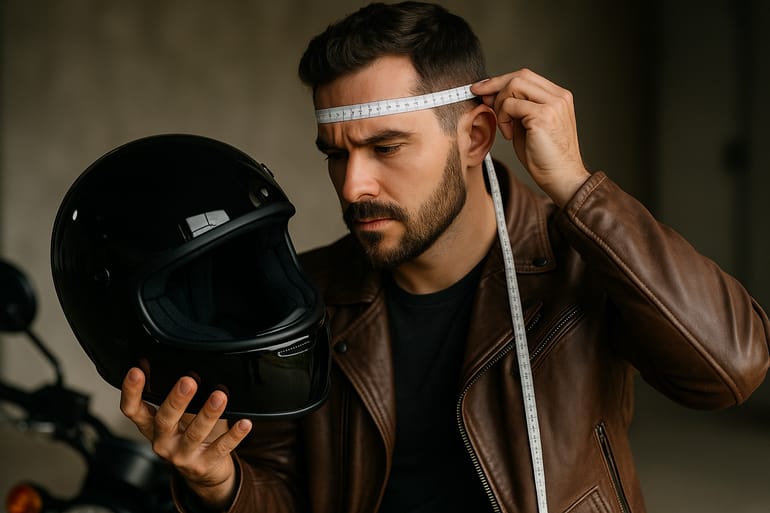
Why size and fit matter more than any feature

Getting your helmet size and fit right isn’t just about comfort—it’s about safety. A helmet that’s too loose can rotate or come off in a crash, while one that’s too tight causes pressure points that distract you on the road. Dial in your helmet size and fit and everything else improves: vision, noise control, and confidence.
What you’ll learn here
- How to measure head circumference correctly
- How to match head shape to a helmet’s internal shape
- Practical try-on tests for a secure, comfortable fit
- How full-face, modular, open-face, and dual-sport designs influence fit
- How certifications like ECE, DOT, and Snell connect to retention and comfort
A properly fitted helmet should feel uniformly snug—like a firm handshake around your head—without sharp hot spots. Cheek pads start tight and ease up slightly after break-in. If you can twist the helmet easily, or it lifts at speed, it’s the wrong fit. By the end, you’ll know how to measure, test, and choose a shell and liner that keep your helmet size and fit on point for commuting, touring, or weekend rides.
How do you measure your head for the right size?
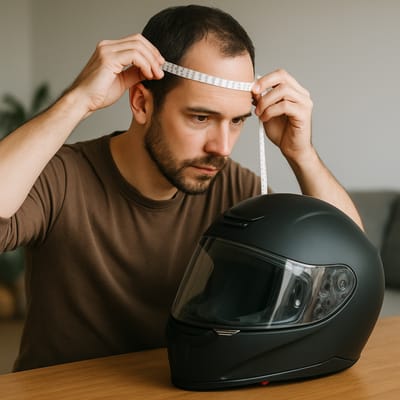
Step-by-step measuring
- Use a soft tape measure. Wrap it level around your head, just above the eyebrows and ears—the largest circumference.
- Take two or three readings and use the largest number.
- Compare your measurement with the manufacturer’s size chart. Sizes vary, so always check the chart.
- Between sizes? For most riders, choose the smaller if the fit is close; liners usually break in 5–10%.
- Consider hairstyle and seasons. Thick hair or winter balaclavas can change the feel—recheck your helmet size and fit with what you’ll actually wear.
- Try multiple shell/liner combinations if available. Some lines offer different cheek pad or crown thicknesses.
Fit expectations
A new helmet should be uniformly snug: no gaps at the temples, crown, or occipital area. You shouldn’t feel pinpoint pain. With the strap secured, hold the chin bar and move the helmet side to side and up/down—your scalp should move with it. If it spins independently, it’s too big. If you feel immediate ache at one spot, it’s the wrong shape or too small. Get these basics right and your helmet size and fit will stay consistent across riding conditions.
What head shape and fit checks matter most?
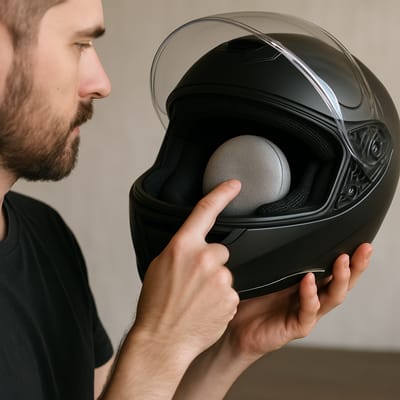
Match internal shape to your head
Most lids are designed around three common shapes: round oval, intermediate oval, and long oval. If a helmet matches your head shape, pressure spreads evenly. Mismatch it and you’ll feel hot spots—often at the forehead (too round) or at the sides (too long).
Quick fit tests
- Forehead press test: After 5–10 minutes, remove the helmet. A deep red line on your forehead means it’s too round or small.
- Cheek pad test: Cheeks should be gently compressed. You should bite the inside of your cheeks slightly when talking; pads will ease with use.
- Roll-off test: With the strap secured, try to pull the helmet up and off from the rear—proper fit stays put.
- Rotation test: Twist the helmet; your skin should move with it. Independent rotation = too large.
- Vision and posture: The eyeport should sit just above your eyebrows with a clear, wide field of view.
Wear the helmet indoors for 15–20 minutes to confirm comfort. Resolving shape first, then size, delivers the most reliable helmet size and fit—and avoids chasing problems by swapping pads on a mismatched shell.
Does helmet type change how a helmet should fit?
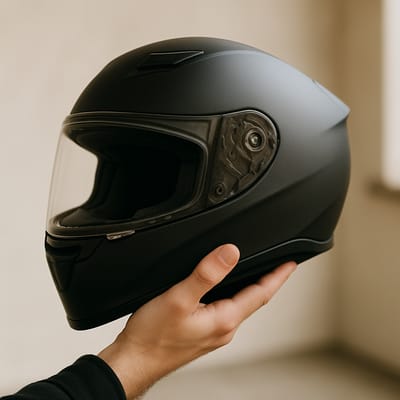
Full-face
Best overall stability and protection. Expect a slightly snugger feel at the cheeks and a firm seal around the crown for reduced noise. Great for commuting and highway riding.
Modular
A bit heavier due to the hinge. Ensure the chin bar locks positively and passes a solid roll-off test. Glasses wearers should confirm temple comfort with the chin bar closed. Slightly looser cheeks after break-in are normal.
Open-face
Relies heavily on strap security and crown fit. Because there’s no chin bar, verify a firm helmet size and fit around the temples and back of the head. Expect more wind noise; earplugs help on longer rides.
Dual-sport / ADV
Taller eyeport and peak. Check that the peak doesn’t tug at speed and that goggles (if used) seal without pressure. Confirm that added ventilation doesn’t create pressure points at the brow.
No matter the type, prioritize stable crown contact, secure strap retention, and clear vision. If you swap between commuting and touring, consider liner options or cheek pad sizes to fine-tune helmet size and fit across seasons and gear.
Safety labels, break‑in, and when to size up or down
Certifications and retention
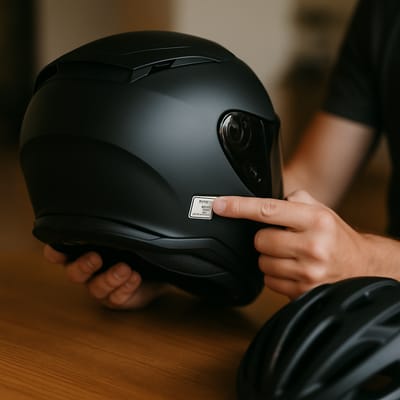
Look for ECE (preferably ECE 22.06), DOT, or Snell labels inside the helmet. These standards validate impact and retention performance. A strong D‑ring or micrometric buckle, routed correctly and snug under the jaw, keeps the helmet stable.
Break‑in timeline
Expect pads to settle 5–10% in the first 10–20 hours. Start with a comfortably snug fit—if it feels “just right” brand new, it may become loose later. If pain shows up in minutes, that’s shape, not break‑in.
Size decisions
- Size down if the helmet rotates independently or you can slip fingers easily between crown and liner.
- Size up if you have persistent hot spots or headaches after 10–15 minutes.
- Swap cheek pads/crown liners to fine‑tune before changing shell sizes, if the line allows.
Smart buying tip
Buy from sellers with clear size charts and painless exchanges, so you can test helmet size and fit at home with your usual glasses, earplugs, and balaclava. Recheck fit yearly; hair changes, pad compression, and new gear can subtly alter comfort and stability.