Full-Face vs Open-Face Helmets: Commuter Guide 2025

Full-face vs open-face: what works best in the city?

If you split your time between traffic lights, bus lanes, and short hops across town, the full-face vs open-face helmets debate hits home. In city riding, you balance protection, airflow, visibility, and convenience every single day. Here’s a quick way to think about it:
- Full-face helmets offer the most coverage, including a protective chin bar and a sealed visor system.
- Open-face (3/4) helmets trade chin protection for a wider sense of openness and breezier airflow.
What you’ll learn here
You’ll get a clear comparison of safety, comfort and ventilation, visor tech, and real-world scenarios to help you decide. We’ll also share a quick sizing guide and a plain-English look at ECE, DOT, and Snell so you know what those labels mean.
City priorities to weigh
- Stop‑and‑go heat management vs. weather and pollution shielding
- Low to medium speeds vs. occasional ring‑road dashes
- Quick conversations at fuel stops vs. maximum impact protection
By the end, you’ll know when full-face vs open-face helmets make sense for your commute—and how to pick a model that fits right and keeps you comfortable mile after mile.
Safety and protection: where coverage really counts
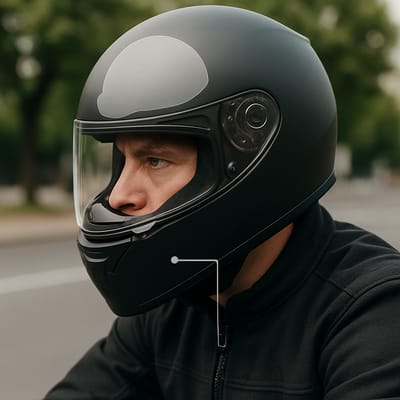
Coverage and impact zones
A full-face helmet protects the chin and jaw with a rigid bar, plus a visor that seals against wind, debris, and rain. In many crashes, the lower face is exposed to impact—coverage here can be decisive. An open-face leaves the chin area uncovered; you’ll want quality eye protection (goggles or a robust visor) at minimum.
Standards made simple
- ECE 22.06: Current European standard with tougher, more varied impact tests.
- DOT FMVSS 218: US standard focusing on minimum performance criteria.
- Snell: Independent standard with more demanding test procedures (on select models).
Both helmet types can be certified, but remember: certification doesn’t equal identical protection. A certified full-face still adds the chin bar advantage. If you ride in busy traffic with unpredictable hazards—delivery vans, potholes, slick paint—prioritize comprehensive coverage. For riders who value openness, pair an open-face with a shatter-resistant visor and consider a bandana or mask for grit and bugs. Whatever you choose, check a snug fit and replace any helmet after a significant impact.
Comfort, airflow, noise, and visibility in urban traffic
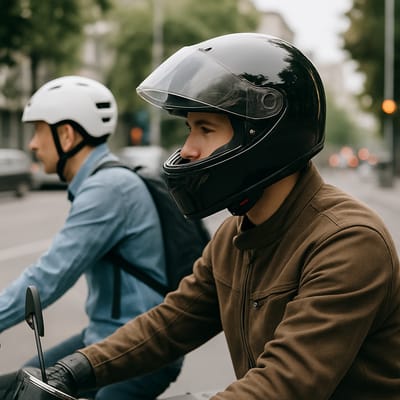
Heat and airflow
Open-face helmets naturally flow more air at low speeds—ideal for stop‑and‑go summers. Modern full-face designs counter with adjustable ventilation and moisture‑wicking liners. Look for large intake vents, rear exhausts, and smooth interior channels.
Fogging and visor tech
Full-face visors can fog at lights. Choose anti‑fog coatings or insert-ready shields and crack the visor one notch when stationary. Open-face designs reduce fogging but expose eyes to dust, pollen, and drizzle—use a quality visor for city use.
Noise and visibility
A well‑sealed full-face is usually quieter, cutting fatigue on short ring‑road stretches. Open-face helmets deliver a broader sense of space and easy conversations at fuel stops, but can be noisier above 50–60 km/h. For visibility, favor clear, optically correct visors and consider drop‑down sun visors for quick light changes in tunnels or tree‑lined streets.
Bottom line: for pure breezy comfort at low speeds, open-face wins. For mixed routes, variable weather, and longer daily mileage, a full-face often feels calmer and more versatile.
How to choose: quick scenarios for city commuters

Choose a full-face if you:
- Ride year‑round or in wet/cold weather and want better weather sealing
- Mix city streets with short highway or ring‑road sections
- Prefer lower noise and strong chin protection
- Want the simplest all‑in‑one visor solution (anti‑fog, tear‑off or insert‑ready)
Choose an open-face if you:
- Ride short, low‑speed hops across neighborhoods
- Prioritize maximum airflow and easy conversation at stoplights
- Wear glasses and value easy on/off without visor interference
- Accept trading chin coverage for a lighter, open feel
Buying tips
- Try multiple sizes and shell shapes; shake your head—no hot spots, no lift.
- Check certifications (ECE 22.06, DOT) and inspect the retention strap for security.
- Plan your ear protection: even city speeds can cause fatigue over time.
Use this as a decision framework: full-face vs open-face helmets both serve city riding well—your route, weather, and comfort preferences decide the winner.
Fast fit and standards checklist (2-minute guide)
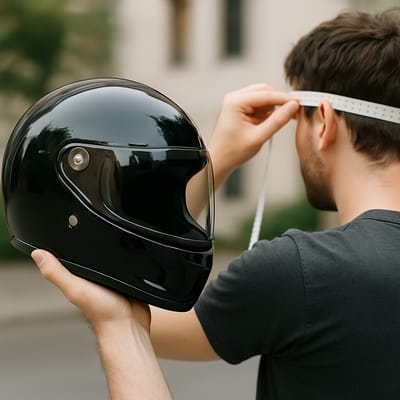
Sizing in three steps
- Measure your head: place a soft tape above the eyebrows and around the largest part of the skull. 2) Match the number to the brand’s size chart equivalent and try at least two sizes. 3) Fit check: the helmet should feel snug, not painful; hold the shell and move it—your scalp should move with it. With a full-face, press your chin—there should be minimal contact with the chin bar.
Quick standards refresher
- ECE 22.06: newer, broader impact scenarios and visor tests.
- DOT FMVSS 218: US compliance; verify proper labeling.
- Snell: optional, higher‑demand tests on select models.
Care to keep it safe
- Keep the visor clean with mild soap and a microfiber cloth.
- Let the liner dry after sweaty rides; remove and wash if the manual allows.
- Replace helmets after a major impact or around 5–7 years of use.
Nail the fit, confirm a recognized standard, and maintain the helmet—those three steps matter more than any single feature when comparing full-face vs open-face for urban commuting.