SHARP Helmet Rating: How It Works + Buying Tips 2026
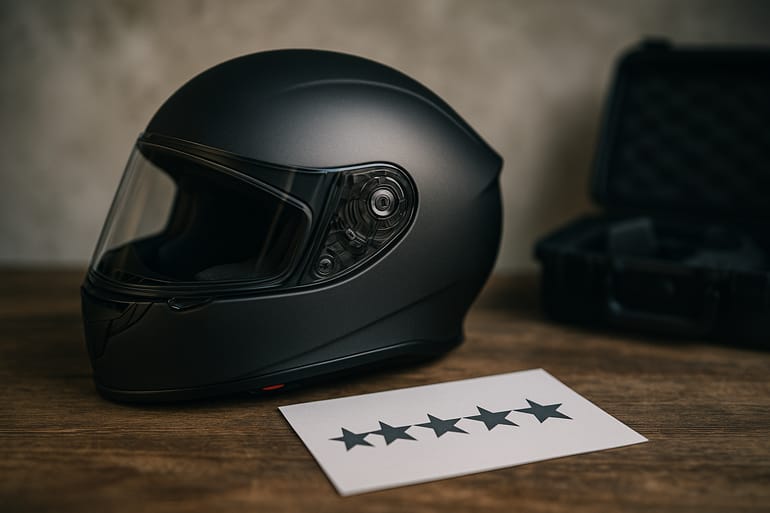
Why SHARP matters for smarter helmet choices

A quick guide to the SHARP helmet rating
Confused by the stars you see on some lids? The SHARP helmet rating is an independent UK program that helps riders compare how well certified motorcycle helmets manage crash energy. It doesn’t replace legal approvals like ECE 22.06 or DOT—it complements them by showing comparative protection performance from 1 to 5 stars.
What you’ll learn here
- What SHARP is and how its tests work
- What a 5‑star result really means in the real world
- How SHARP relates to ECE 22.06 and DOT, and how to use it when buying
A helmet’s protection comes from the shell and the EPS foam liner working together to absorb and spread impact forces. SHARP evaluates this energy management across multiple impact points and speeds, then translates the results into an easy star scale. That makes it practical when you’re choosing between several models that all meet the same approval.
If you ride year‑round, tour long distances, or commute daily, using the SHARP rating alongside proper fit can help you narrow the field quickly. In the sections below, we’ll break down how SHARP testing works, how to read a 5‑star result without over‑promising, and the smart way to combine SHARP with ECE 22.06 or DOT to pick a safer, better‑fitting helmet.
What is SHARP and how does it test helmets?
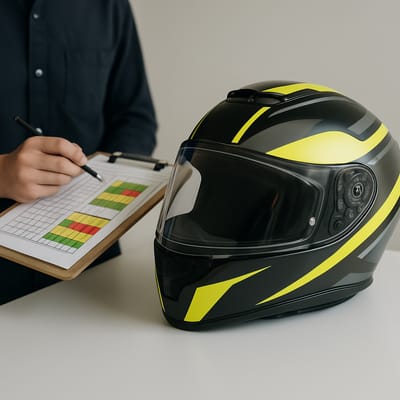
Independent testing, clear comparison
SHARP (Safety Helmet Assessment and Rating Programme) is a UK government‑backed initiative that provides an independent, comparative 1–5 star score for motorcycle helmets already approved for road use. It’s not a certification; it’s a performance comparison that sits on top of ECE or DOT approvals.
How the SHARP tests work
- Multiple samples: Several units (often across sizes) of the same model are tested to reflect manufacturing variation.
- Multiple impact points: Common strike zones around the shell are hit to reveal strong and weak areas. Results are shown as a color‑coded map.
- Different speeds: Impacts at varied velocities simulate a range of crash severities.
- Linear impact energy: Instruments measure how well the shell and multi‑density EPS foam attenuate energy to protect your head.
- Modular note: For flip‑front helmets, SHARP reports a percentage indicating how often the chin bar stayed locked in impacts.
What the stars mean
More stars generally indicate better energy management across the tested scenarios. The model’s zone map helps you see where protection is strongest or weaker. Because testing uses multiple samples and speeds, the score gives a realistic, rider‑friendly comparison you can use to shortlist helmets that fit your needs.
How to read a SHARP 5‑Star rating when buying
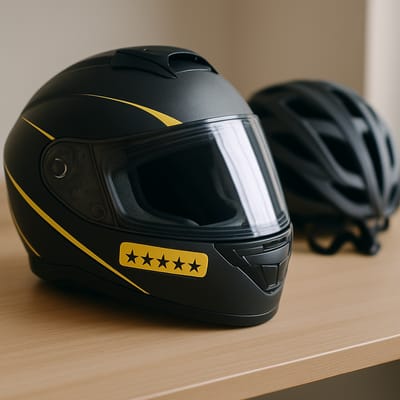
What 5 stars really signals
A SHARP 5‑star rating indicates the helmet managed impact energy exceptionally well across SHARP’s tests, compared with lower‑rated models. It’s a strong indicator of performance, but it’s not a guarantee of outcome in every crash—real protection still depends on fit, retention, and riding conditions.
Turn the rating into a safer purchase
- Start with approval: Prioritize helmets that meet ECE 22.06 (or DOT if applicable). Approval is mandatory; SHARP refines your choice.
- Dial in fit: Choose the right size and internal shape. A snug, even contact with the EPS liner and pads reduces movement and improves protection.
- Read the zone map: Check if areas important to you (temples, sides, crown) are green/yellow. Consistency matters, not just the overall stars.
- Flip‑front check: For modulars, review SHARP’s chin‑bar lock percentage.
- Weigh key features: Look for multi‑density EPS, sturdy shell construction, secure double‑D or micrometric retention, and clear visor mechanisms.
- Comfort for miles: Lower weight, stable aerodynamics, and adequate ventilation reduce fatigue, helping you ride safer longer.
Used this way, a SHARP 5‑star result becomes a practical tiebreaker between well‑fitting, approved helmets that already meet your needs.
SHARP vs ECE/DOT: what the ratings mean for you
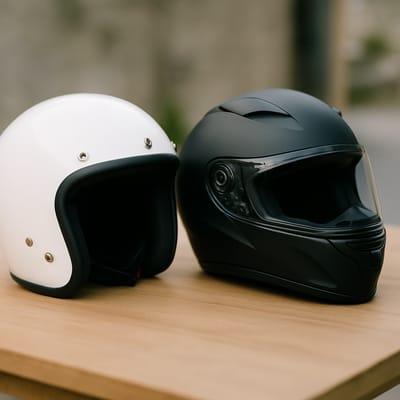
Pass/fail vs comparison
- ECE 22.06: A rigorous European approval with multiple impact locations, varied speeds, and added oblique (rotational) tests. It’s a legal pass/fail standard.
- DOT (FMVSS 218): A US approval that’s also pass/fail, with manufacturer self‑certification and spot enforcement.
- SHARP: An independent, comparative program that scores already‑approved helmets on 1–5 stars based largely on linear energy attenuation across zones.
How to use them together
- Meet the law first: Choose a helmet approved for your region (ECE 22.06 or DOT).
- Compare with SHARP: Use the SHARP rating and zone map to differentiate models that already fit you well.
- Think beyond numbers: Fit, field of view, stability, and noise all affect real‑world safety.
- Consider rotation too: ECE 22.06 includes oblique tests; SHARP focuses primarily on linear impacts. If rotational performance is a priority, look for shells, liners, or slip‑plane designs that address it.
Bottom line
Approval makes a helmet legal; SHARP helps you pick the better performer among legal options. Prioritize the right size and head shape, confirm ECE 22.06 or DOT, then let SHARP’s stars and zone map guide you to the safest choice that you’ll actually wear every ride.