Bicycle Helmet Cushions: Materials & Comfort Guide 2025
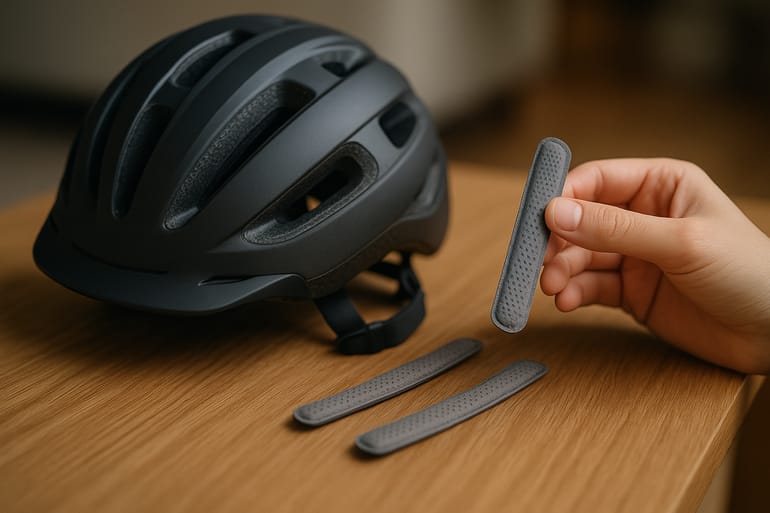
What makes bicycle helmet cushions so important?
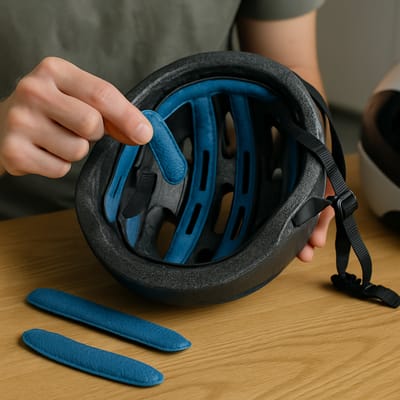
Bicycle helmet cushions do more than feel soft—they directly influence comfort, fit, and long-term hygiene. When you understand bicycle helmet cushions, you can dial in a secure fit without pressure points and keep your lid fresh ride after ride.
What cushions actually do
- Micro-fit tuning: Padding thickness helps fine‑tune the gap between your head and shell for a stable, shake‑free fit.
- Moisture control: Wicking fabrics pull sweat away, reducing hotspots and foggy glasses at low speeds.
- Hygiene barrier: Removable pads let you wash sweat and salt out, limiting odor and skin irritation.
Cushion layers in context
Inside most helmets you’ll find a hard impact liner (EPS or similar) that manages crash energy, and a separate comfort padding set that touches your skin. Only the comfort pads are meant to be swapped for fit and freshness. The impact liner is not padding and must never be modified.
In this guide, you’ll learn which padding materials feel best, how thickness affects stability and comfort, and simple routines to wash and maintain your pads. Whether you commute daily or ride weekends, getting bicycle helmet cushions right makes every mile quieter, cooler, and more secure.
Which padding materials deliver the best comfort?
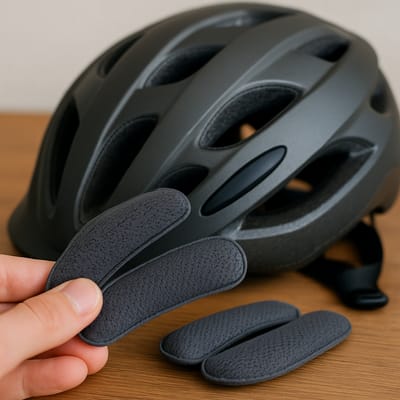
Comfort pads combine a soft foam core with a breathable fabric cover. The most common foam types are:
- PU foam: Plush, affordable, holds shape reasonably well.
- EVA foam: Slightly firmer, durable, resists sweat compression.
- Viscoelastic foam: Memory‑like feel that conforms to your head for pressure relief.
Fabric covers matter as much as foam:
- Moisture‑wicking knits move sweat away to speed evaporation.
- Mesh panels increase airflow over the forehead and crown.
- Antimicrobial treatments help control odor between washes.
Construction details to look for:
- Multi‑piece pad sets (crown, sides, brow) let you mix thicknesses for custom fit.
- Low‑profile hook‑and‑loop anchors that hold securely without scratching skin.
- Finished edges and flat seams to prevent rubbing on longer rides.
Remember: the impact liner (EPS) is separate and not a comfort material. Bicycle helmet cushions sit on top of it to manage sweat and contact comfort. If you run hot or ride in humid climates, prioritize lightweight wicking fabrics and open‑mesh channels; if you value plush feel, a thicker PU or viscoelastic core may be the most comfortable choice.
How does padding thickness affect fit and safety?
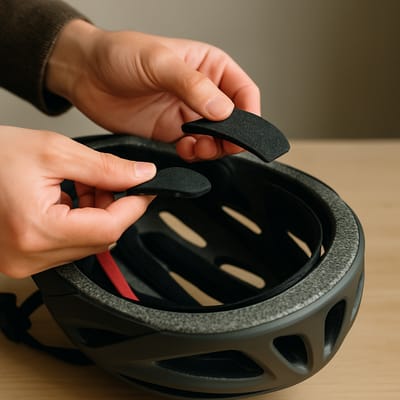
Thickness is your fine‑tuning tool. Most bicycle helmet cushions range from about 3–8 mm. Thicker pads add plushness and fill space; thinner pads create a roomier feel and more airflow.
Getting the fit right
- The helmet should sit level, about two fingers above your brows.
- With the straps snug, shake your head: minimal movement without pain is the goal.
- If it wobbles, try thicker brow or side pads; if you feel pressure points, swap to thinner pieces.
Balance comfort and stability
- Use thickness to adjust micro‑fit, not to correct the wrong helmet size. If you need more than ~8 mm to stabilize, consider a different size.
- Avoid stacking multiple pads in one spot; uneven layers can create hot spots and reduce airflow.
- Ensure pads don’t interfere with any slip‑plane or internal harness—cushions should sit flat and fully adhered.
Safety considerations
Cushions are for comfort and positioning, not impact protection. Never trim the impact liner or glue foam to it. If your pads are fully compressed, slick, or misshapen, they can compromise stability, making the helmet shift during a jolt. Fresh, correctly sized bicycle helmet cushions keep the shell aligned so the protective liner can do its job.
When should you replace pads—and how do you choose?
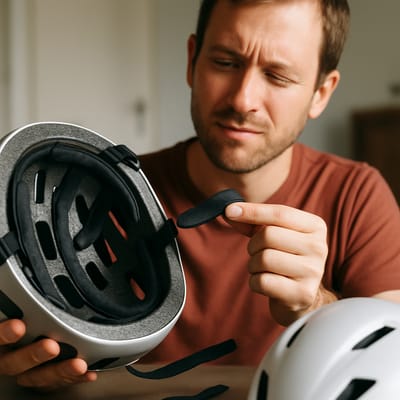
You’ll know it’s time to replace bicycle helmet cushions when you notice:
- Persistent odor after washing
- Foam that feels compressed or flakes apart
- Fabric that’s frayed, slick, or irritates skin
- Hook‑and‑loop that no longer grips
Choosing the right replacements
- Match the kit type to your helmet layout (crown, side, and brow pieces).
- Select thickness close to your current pads (measure with a ruler; common sizes are 3, 5, and 7 mm). Go one step thicker for stability, thinner for ventilation.
- Prefer moisture‑wicking, quick‑dry fabrics with antimicrobial treatment for daily commuting.
- Check anchor style (adhesive dots or hook‑and‑loop); ensure compatibility with your shell attachment points.
- If unsure, a universal replacement pad kit with multiple shapes lets you test and mix pieces.
Tip: Rebuild both sides symmetrically to keep fit balanced. After installing new helmet padding, do a shake test and a 20‑minute ride to confirm no hotspots develop. Many riders replace pads every 6–12 months in sweaty climates, or sooner if the foam loses rebound. Fresh cushions restore comfort, reduce odor, and help maintain a steady, confident fit.
How do you wash pads and keep them fresh?
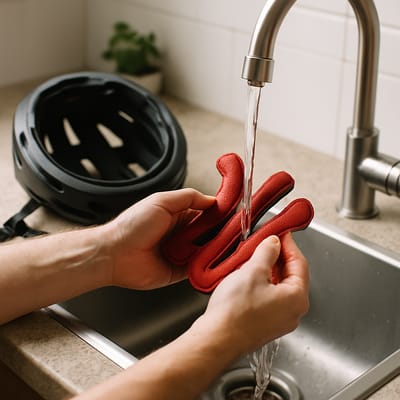
Regular cleaning keeps bicycle helmet cushions soft and odor‑free.
Quick washing routine
- Remove all pads and the brow band. Brush off grit.
- Hand‑wash in cool water with pH‑neutral soap or a gentle sports wash.
- Rinse thoroughly until water runs clear—soap residue attracts dirt.
- Squeeze gently; don’t wring. Air‑dry flat, away from heat and sun.
- Wipe the shell and straps with mild soap; rinse and dry.
Deep‑clean tips
- For odor, soak pads 10 minutes in a 1:10 white vinegar solution, then rinse well.
- Avoid bleach, softeners, or high heat—these break down foam and fabrics.
- Rotate two pad sets so one can dry fully between rides; most pads dry in 8–12 hours.
Maintenance habits
- Rinse sweat after hot rides; salt crystals stiffen fabric.
- Store your helmet in a cool, dry place with vents open.
- Inspect hook‑and‑loop and adhesive dots monthly; replace if they lose grip.
Clean, dry helmet padding lasts longer, feels better, and reduces skin irritation. A simple routine protects your investment and keeps every commute fresher and more comfortable.