Helmet Foam Inserts: Complete Materials & Fit Guide 2025
What Are Helmet Foam Inserts—and Why They Matter?
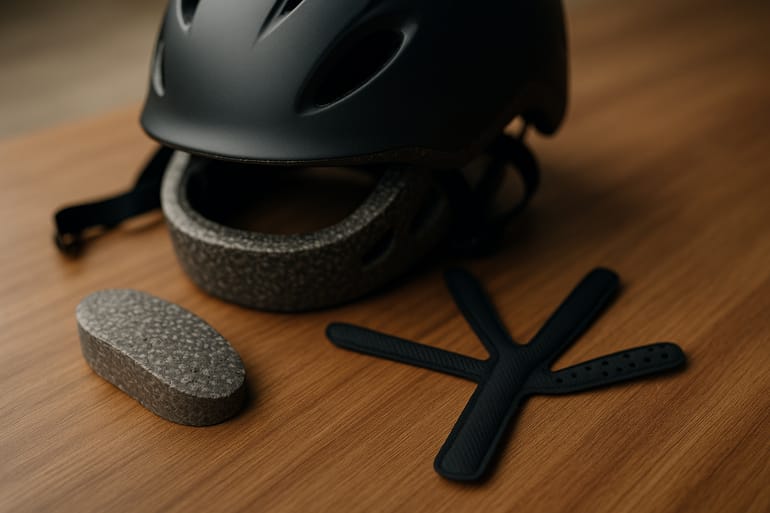
Helmet foam inserts are the engineered layers inside your helmet that absorb impact energy and fine‑tune fit. In most motorcycle and bicycle helmets, the core safety layer is a crushable EPS liner supported by comfort padding made from EVA or other foams. When you crash, helmet foam inserts deform to slow your head down over a slightly longer time, reducing peak forces on the brain.
What they do
- Absorb impact energy through controlled crushing of EPS
- Stabilize fit with pads that eliminate pressure points
- Manage comfort by wicking sweat and shaping airflow channels
- Support safety standards (e.g., ECE, DOT, CPSC) by delivering consistent performance
You’ll often hear about safety ratings and lab tests at different angles and speeds. Those results are only possible because helmet foam inserts are tuned for real‑world impacts. Comfort padding also matters: a stable, snug fit keeps the shell and EPS aligned so they can work as designed. If a helmet feels loose, it can rotate or shift before the EPS engages, and protection drops. Understanding helmet foam inserts helps you evaluate materials, fit options, and maintenance—so you can ride longer and safer with fewer hot spots, less noise, and confidence that your lid will perform when it matters most.
EPS vs EVA: What’s Inside Your Helmet?
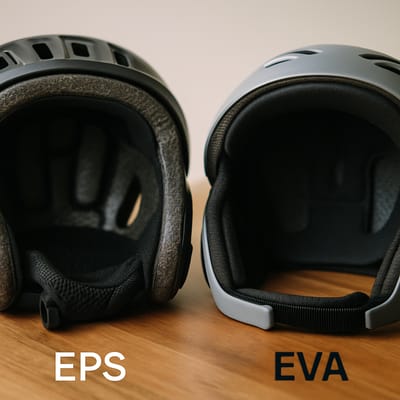
Helmets typically combine two foam systems: the impact liner and the comfort liner. The impact liner is almost always EPS (expanded polystyrene)—a lightweight, crushable foam that permanently deforms in a crash to disperse energy. Comfort components may use EVA (ethylene‑vinyl acetate), polyurethane foams, or fabric‑wrapped pads to refine fit and wick sweat.
Common materials
- EPS (impact liner): High energy absorption, one‑time use, tunable densities
- EVA (fit/comfort pads): Resilient, adds cushioning, shapes micro‑fit
- EPP (some applications): Rebounds after lower‑energy hits, less common in road lids
- Comfort foams and mesh: Improve feel, airflow, and hygiene via removable liners
Why EPS for safety? Its closed‑cell structure crushes predictably, turning a sharp hit into a broader, lower peak load. Multi‑density EPS zones around the crown, sides, and chin areas let designers tune protection across different impact points. EVA and similar pads then fill the micro‑gaps between your head and the liner so the helmet sits stable without painful hotspots.
Whether you ride on the road or trail, look for removable liners, multi‑density EPS, and available pad kits. These features make helmet foam inserts easier to clean, adjust, and—when worn—replace, keeping both comfort and protection on point.
How Does Foam Density Change Protection and Comfort?
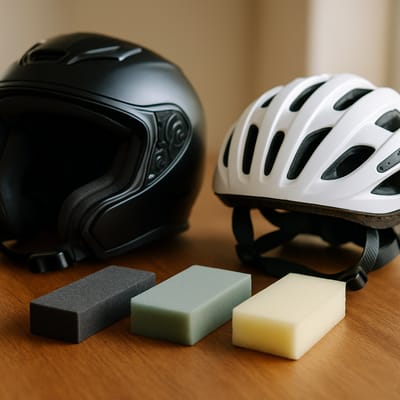
Foam “density” describes how firm a liner is and how it collapses under load. In practice, designers blend multi‑density EPS to manage a wide range of impacts. Softer zones crush early to tame lower‑speed knocks; firmer zones hold up during harder hits so the liner doesn’t bottom out too quickly.
Why density tuning matters
- Low‑speed slips: Softer EPS sections reduce peak g‑loads you actually feel
- High‑energy impacts: Firmer regions keep you from punching through the liner
- Oblique angles: Shaped channels and surface textures help manage shear and rotation
- Comfort balance: The right density pairing minimizes harshness while staying secure
Comfort pads in EVA or fabric‑wrapped foams don’t replace the safety liner, but they influence stability and pressure distribution. A stable fit ensures the shell and EPS stay aligned the instant an impact begins. If helmet foam inserts are too soft or packed‑out, the helmet can move before the EPS engages, reducing protection and increasing risk of facial or neck strain.
When comparing lids and reading test results, pay attention to mentions of multi‑density liners, shell shapes, and interior padding systems. Together, these choices show how the helmet manages different crash scenarios without sacrificing all‑day comfort.
Getting the Fit Right: Pads, Sizing, and Hotspots
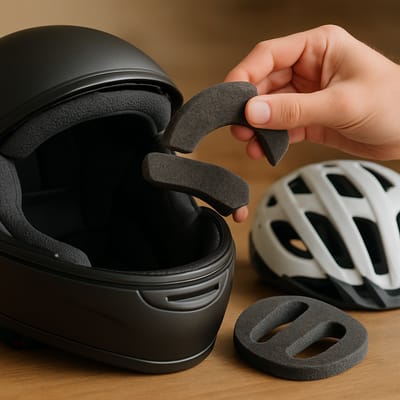
Great protection starts with great fit. Helmet foam inserts can only do their job if the helmet sits snugly and evenly around your head.
Quick fit checklist
- Measure head circumference and choose the closest size.
- Try the helmet for 10–15 minutes to reveal any hotspots.
- Use thicker or thinner cheek pads and crown pads to fine‑tune.
- The helmet should not rotate easily; slight even pressure is ideal.
- Glasses should slide in without painful pinch points.
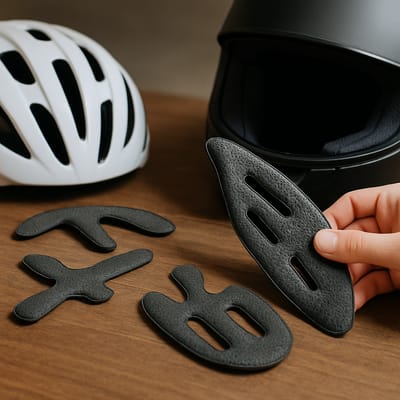
Comfort pads—often EVA or soft polyurethane—let you adjust micro‑fit without changing the shell size. If you’re between sizes, a pad kit can stabilize the crown and cheeks for a secure seal that reduces noise and improves ventilation control. Remember, pads will “bed in” slightly after a few rides. Start with a snug feel so the liner doesn’t become loose later.
Common signs you need adjustments include forehead pressure, hot spots near the temples, or a helmet that lifts at speed. Well‑chosen helmet foam inserts promote even contact, maintain proper eye‑port alignment, and help the EPS stay centered in a crash. Prioritize removable liners and readily available replacement pads—you’ll extend comfort, hygiene, and the service life of the fit system.
Care & Replacement: When to Renew Foam and Liners
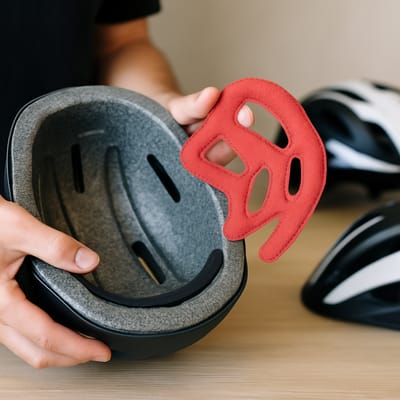
Even the best helmet foam inserts don’t last forever. The EPS safety liner is single‑impact: replace the helmet after any crash or hard hit to the shell. Comfort padding wears with sweat, UV, and compression.
Maintenance tips
- Wash liners by hand with mild soap; air‑dry out of direct sun
- Avoid solvents (alcohol, fuel, strong cleaners) that can weaken foams
- Inspect regularly for cracks, loose glue, or packed‑out pads
- Store cool and dry; heat and UV accelerate aging
When to replace
- After any impact with your head inside the helmet
- If EPS shows cracks, crunching, or visible gaps
- When pads stay flat, smell returns quickly, or fit feels loose
- At the end of the recommended service life (commonly 3–5 years for pedal use, ~5 years for motor use, depending on wear)
Refreshing comfort pads restores stability and hygiene, helping the EPS do its job. If pad kits are available for your model, match thickness to recover the original fit. By cleaning regularly and renewing worn parts on time, you keep helmet foam inserts performing as designed—delivering reliable protection and day‑long comfort on every ride.