NFL Helmet Safety Standards: NOCSAE vs NFL Tests 2026
Why do NFL helmet safety standards matter today?
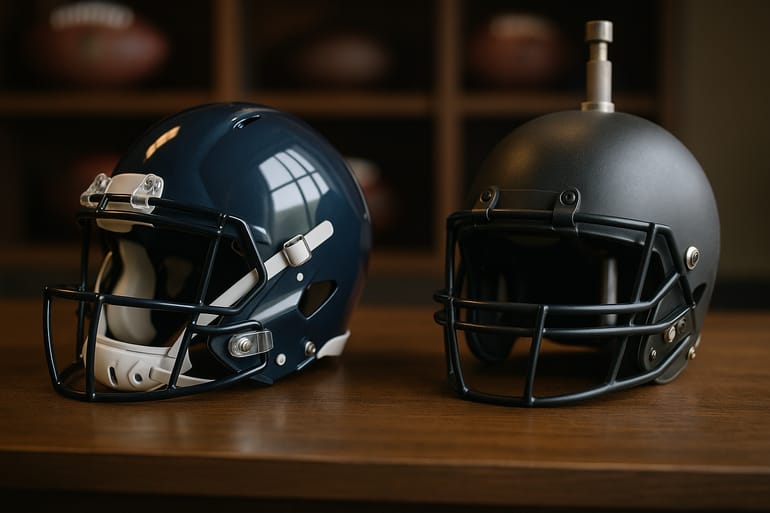
The stakes are high in contact sports, which is why understanding NFL helmet safety standards helps you separate marketing from meaningful protection. In football, two systems shape decisions: NOCSAE certification (the baseline pass/fail standard) and the NFL–NFLPA annual testing program (a comparative ranking used by teams). Knowing how they differ—and how they compare to motorcycle rules like ECE 22.06 and DOT—will make you a smarter buyer and a safer player or parent.
What you’ll learn
- How NOCSAE certification works and what it guarantees
- How the NFL’s lab tests create yearly performance rankings
- Why football and motorcycle helmets face very different impact scenarios
- Practical tips on fit, materials (like EPS), reconditioning, and replacement
Quick takeaway
Think of NOCSAE as the minimum gatekeeper for football helmet certifications. The NFL’s protocol then goes further, comparing models under game-like impacts to estimate relative concussion risk. Motorcycle standards prioritize single, higher-energy crashes and include retention and penetration checks. Use this guide to match the right helmet to the right sport, dial in fit, and plan maintenance so protection stays consistent all season.
What does NOCSAE certify, and how do NFL tests differ?
NOCSAE certification (the baseline)
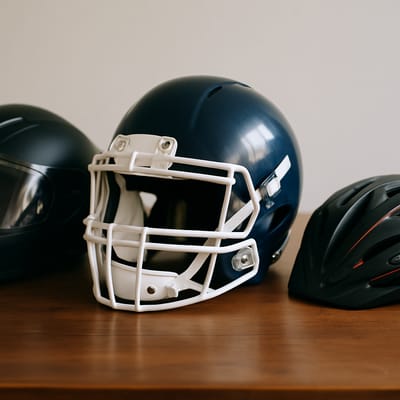
NOCSAE sets a performance specification for newly made and reconditioned football helmets. Independent certification bodies verify compliance through controlled lab impacts. Key points:
- Pass/fail performance threshold for impact attenuation
- Applies to new helmets and those that are regularly reconditioned
- Requires proper labeling and documentation
- Focuses on reducing head acceleration within defined limits
In short, NOCSAE tells you a helmet meets a recognized safety bar. It does not rank helmets.
NFL–NFLPA annual lab testing (the comparison)
Each year, the league and players’ association commission lab tests that simulate on‑field impact speeds, angles, and locations. Helmets are then grouped from top to lower performers based on a risk-based metric derived from linear and rotational acceleration across multiple impacts. Important distinctions:
- Not a certification—it's a comparative evaluation
- Uses game-informed conditions to differentiate models
- Results are published to guide team equipment choices
Bottom line
Use NOCSAE to confirm a helmet is certified—and the NFL testing protocols to understand relative performance among certified options. Together, they give you both minimum assurance and practical guidance.
How do football and motorcycle helmet standards compare?
Different sports, different physics
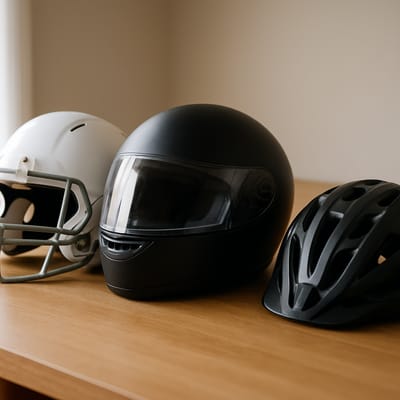
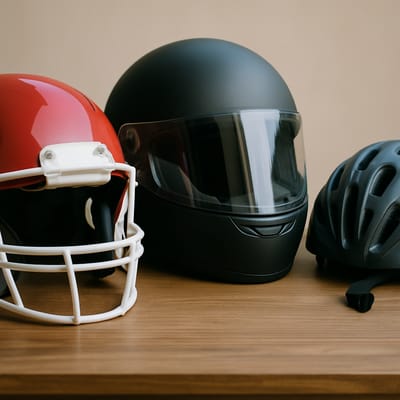
Football involves frequent, moderate‑energy, multi‑directional impacts across a game. Motorcycling plans for fewer but higher‑energy crashes with potential slides and strikes against hard surfaces. That’s why standards diverge:
- Football (NOCSAE): Multi‑impact attenuation focus; reconditioning pathway; no road‑crash features.
- Motorcycle:
- ECE 22.06: Wider test matrix, higher impact energies, oblique (rotational) tests, visor and accessory checks.
- DOT (FMVSS 218): US self‑certification with impact, penetration, and retention requirements.
- Snell (M2020): Independent, stringent testing with multiple anvils and higher thresholds.
What this means for you
- Football helmets are optimized for repeated sub‑concussive and concussive events; motorcycle helmets are tuned for a single severe hit and slide.
- Motorcycle standards include retention strap and penetration tests; football standards prioritize impact energy management and fit system stability.
- Gear is not interchangeable. A football helmet isn’t designed for road crashes, and a motorcycle helmet isn’t built for line‑of‑scrimmage collisions.
If you’re cross‑shopping safety concepts, use this section as a football vs motorcycle helmet standards primer—not a replacement. Choose sport‑specific gear that meets the correct certification (NOCSAE or ECE/DOT/Snell) for where you ride or play.
Fit, materials, and maintenance: get the most protection
Materials that manage energy
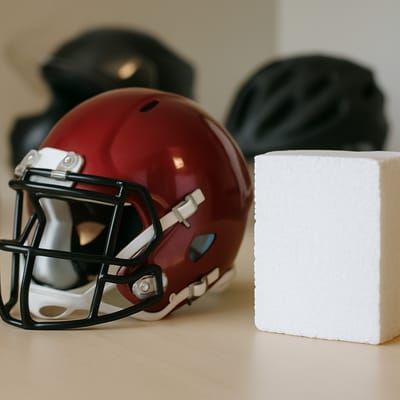
Modern helmets rely on EPS foam (or related foams) to absorb impact by crushing. Football designs add multi‑layered pads—often including EPP or TPU elements—to spread and modulate forces across repeated hits. Motorcycle lids combine multi‑density EPS with a hard shell to manage a single, high‑energy event.
Fit and sizing
- Measure head circumference at the brow; consult the maker’s size chart.
- For football, start with the correct shell size, then fine‑tune with pad thickness or inflation systems. The helmet should be snug with even pressure, no hotspots, and stable during quick head turns.
- For motorcycling, aim for a firm, all‑around seal: cheeks should compress slightly, and the helmet should not roll off when the strap is secured.
Maintenance and replacement
- Football: verify NOCSAE labeling and the reconditioning date; schedule reconditioning regularly; replace after shell damage or any suspected structural compromise.
- Motorcycle: replace after any crash or every five years of use; inspect the strap, liner, and visor regularly.
A quick checklist: correct certification (NOCSAE or ECE/DOT/Snell), dialed‑in fit, intact EPS liner, and a clear maintenance plan. That’s how NFL helmet safety principles translate into everyday decisions.