Carbon Fiber Motorcycle Helmets: Materials Guide 2026
What is carbon fiber in motorcycle helmets?
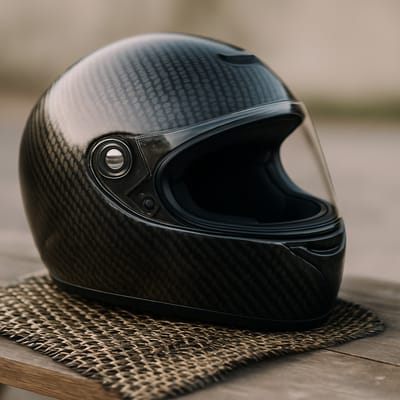
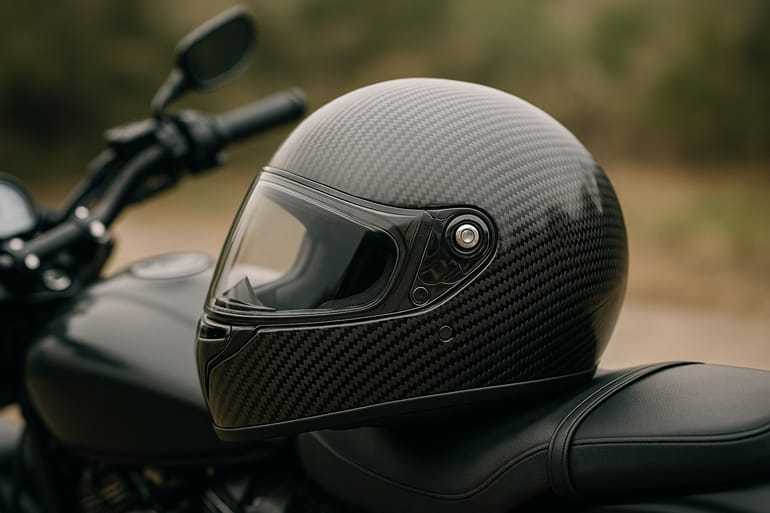
Carbon fiber motorcycle helmets use layers of woven carbon filaments embedded in a resin matrix to form a strong, lightweight shell. Thousands of microscopic carbon strands are bundled into tows, woven into fabric, laid over a mold, and cured with heat and pressure to lock everything into a rigid composite. The result is a shell that distributes impact forces efficiently while keeping overall mass low.
Why riders choose carbon fiber
- Lower weight: Often 100–300 g lighter than comparable fiberglass models, helping reduce neck fatigue on long rides.
- High stiffness-to-weight: Excellent energy distribution when paired with multi-density EPS liners.
- Premium finish: The visible weave has a performance aesthetic many riders love.
Safety context
Material is only one part of protection. Proper fit, multi-density EPS, and modern certifications like ECE 22.06 matter as much as the shell. Carbon fiber can be engineered to meet strict standards, but a poor fit or worn chin strap undermines any material advantage.
In this guide, you’ll learn how 3K carbon weave works, how carbon compares to fiberglass on weight, strength, and price, and how to evaluate and care for a carbon fiber helmet so it performs as intended for years.
How does 3K carbon weave improve helmet performance?
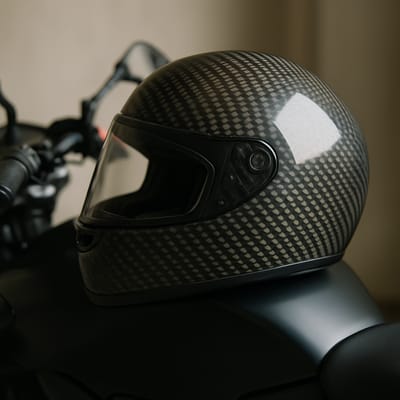
“3K” describes a tow with roughly 3,000 carbon filaments. In helmets, 3K fabrics are popular because they balance drapeability (ability to conform to complex curves) with strength. You’ll typically see a 3K twill or plain weave laid in multiple orientations, then impregnated with epoxy resin and cured to create a rigid composite skin over the EPS.
Benefits of 3K weave
- Conforms to curves: Better coverage around vents and edges, reducing wrinkles and weak spots.
- Weight efficiency: Delivers high stiffness with minimal material mass.
- Crack control: Multi-axial layups (0/90/±45°) help resist crack propagation during impacts.
Trade-offs and realities
- Cost: 3K carbon fiber is pricier than fiberglass fabrics and requires careful processing.
- Point impacts: Composites are engineered to spread energy; extreme point loads can still damage local areas, requiring inspection.
- Resin quality matters: Poor resin ratios or curing can make a shell brittle. Look for consistent finish, even weave, and clean edges.
Note that higher filament counts (e.g., 12K) or hybrid layups may be used for specific stiffness targets, but 3K remains the common choice for carbon fiber helmets thanks to its balanced performance and attractive weave.
Carbon fiber vs fiberglass: which shell suits you?
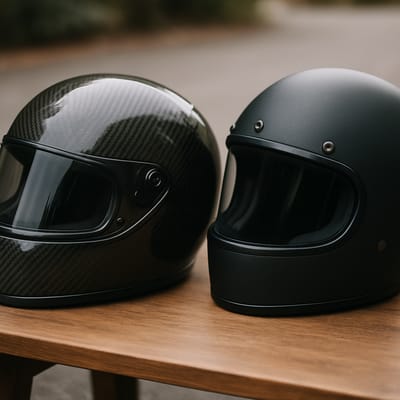
Both carbon fiber and fiberglass shells can meet modern standards like ECE 22.06 when engineered correctly. The choice comes down to priorities and budget.
Key differences
- Weight: Carbon fiber helmets are typically lighter, easing neck strain and improving long-ride comfort.
- Strength & energy spread: Carbon offers higher stiffness-to-weight. Fiberglass can be more forgiving and may show visible damage that cues replacement.
- Price: Carbon fiber usually costs more due to materials and manufacturing precision.
- Finish: Carbon’s exposed weave gives a premium look; fiberglass is commonly painted or wrapped.
Practical takeaways
- If you value a lightweight helmet for touring or track days, carbon fiber is compelling.
- If you want a solid performer at a friendlier price, quality fiberglass or hybrid composite shells are excellent.
- Regardless of material: fit, EPS design, visor seal, and noise management define real-world comfort and safety.
Many shells are hybrids (carbon + fiberglass/aramid) to tune flex and cost. Try on multiple sizes, check weight across sizes, and choose the construction that matches your riding style and budget.
How do you evaluate a carbon fiber helmet?
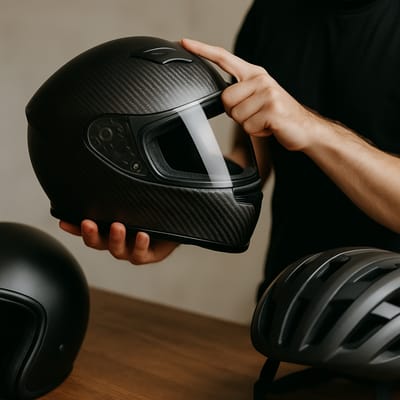
Focus on objective checks that reveal quality beyond the glossy weave.
Quick evaluation checklist
- Certification: Look for current marks such as ECE 22.06 (EU) or DOT/Snell where applicable.
- Weight honesty: Verify claimed grams with a scale, and compare across sizes; lighter is great, but not at the cost of fit or features.
- Fit & shell sizes: Multiple shell sizes across the range improve proportional fit and lower bulk. Aim for snug, even pressure with no hotspots.
- Construction quality: Uniform weave, clean edges, even clearcoat, and precise vent/visor cutouts indicate solid QC.
- EPS & comfort liner: Multi-density EPS, removable/washable liners, and moisture-wicking fabrics enhance comfort and safety.
- Features that matter: Stable visor seal, dependable locking mechanism, usable ventilation, and eyewear compatibility.
- Noise & aerodynamics: Carbon fiber stiffness can help, but shape and seals dominate. Test on-road if possible.
- Support & lifespan: Clear crash-replacement policy and parts availability add value.
Choose the carbon fiber motorcycle helmet that passes these checks and feels stable at speed. A perfect fit with verified certification beats a lighter but ill-fitting shell every time.
How do you maintain carbon fiber helmets safely?

Good care keeps a carbon fiber helmet protective and looking sharp.
Do
- Clean gently: Use mild soap and water on the shell; microfiber for the visor. Let bugs soften with a damp cloth before wiping.
- Protect the resin: Avoid harsh solvents, fuel, brake cleaner, or ammonia—they can dull or weaken the clearcoat and resin matrix.
- Dry fully: Air-dry liners out of direct heat; high heat can degrade adhesives and EPS.
- Store smart: Keep in a cool, dry place away from UV. Use a helmet bag during transport.
Avoid
- Dropping or knocking the helmet; impacts can create hidden damage in composites.
- Stickers/paints not approved by the manufacturer; chemicals may attack the finish.
Replacement rules
- After any crash or significant impact, replace the helmet.
- Consider replacing every 5–7 years depending on use, wear, and manufacturer guidance.
Maintain this routine and you’ll extend the life and appearance of your carbon fiber motorcycle helmet. For more practical gear tips and checklists, sign up for updates so you never miss new safety guidance.