Arc Flash Helmet: 101 Guide, Ratings & Buyers 2026
Arc flash helmet basics: what it does and why it matters
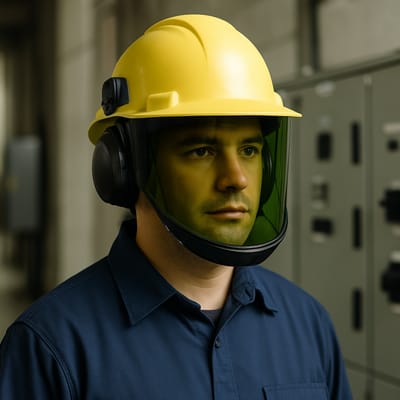
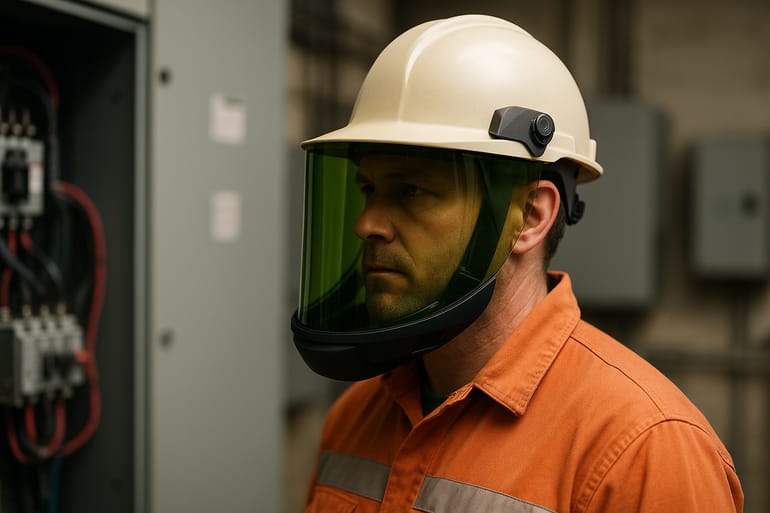
An arc flash helmet protects your head, face, and eyes from the intense heat, light, and pressure of an electrical arc. It’s typically a Class E hard hat paired with an arc‑rated face shield (often with a chin cup) and used with an arc‑rated balaclava or hood. Together, they help block thermal energy measured in cal/cm², reduce burns, and improve visibility when it counts.
What to know up front
- Arc protection is rated by ATPV/EBT (cal/cm²); choose a system that meets or exceeds the job’s incident energy.
- Core standards include NFPA 70E (PPE selection), IEC 61482-1-1/-1-2 (arc testing), and ASTM F2178 (face shields/hoods).
- The helmet is one part of a full PPE system: jacket/pants or coverall, gloves, balaclava/hood, and footwear.
Why it matters
Arc flashes can exceed 35,000°F, projecting shrapnel and a pressure wave. A compliant helmet system helps shield against radiant heat and molten metal while maintaining optical clarity to keep you oriented during switching, racking, or testing. In the sections below, you’ll learn how ratings work, who needs arc flash head protection, and how to choose and maintain a setup that fits your tasks and environment.
What exactly is an arc flash helmet system?
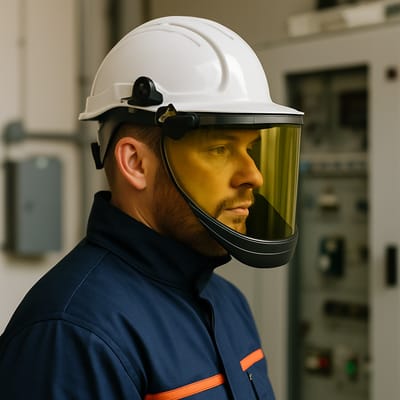
An arc flash helmet isn’t just a hard hat—it’s a head-and-face protection system designed for electrical work where arc energy is possible.
Key components
- Hard hat (ANSI/ISEA Z89.1, Class E): Provides dielectric protection and impact resistance. Type I protects top impacts; Type II adds lateral impact protection.
- Arc‑rated face shield (ASTM F2178): Wraparound visor with a chin cup to reduce heat ingress. Often includes anti‑fog and anti‑scratch coatings and may have lift‑front designs.
- Balaclava or arc hood: Extends coverage to the neck and jaw. In higher energy scenarios, a full hood with a framed visor is used over the hard hat.
How it differs from standard PPE
- Standard hard hats and clear face shields are not tested for arc thermal performance. Arc‑rated shields and fabrics are specifically tested to withstand arc exposure.
- Optical performance matters: arc‑rated visors balance visible light transmission with filtering of infrared/UV to maintain visibility while limiting heat.
Paired correctly, the system helps maintain a protective envelope across the scalp, face, jawline, and neck—areas commonly injured during an arc event—without sacrificing communication or field of view.
Standards and arc ratings: NFPA 70E, IEC 61482, cal/cm²
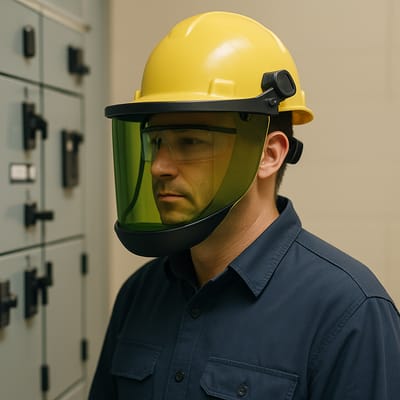
Understanding ratings is the fastest way to choose the right protection.
Core standards
- NFPA 70E: Provides risk assessment, PPE Category (1–4) tables, and selection guidance. Categories align with minimum arc ratings (e.g., 4, 8, 25, 40 cal/cm²) for the overall PPE system.
- IEC 61482‑1‑1 (Open Arc) and IEC 61482‑1‑2 (Box Test): Test methods used to determine arc performance of materials and assemblies.
- ASTM F2178: Specific test method for face shields and hoods under arc conditions.
ATPV vs EBT
- ATPV (Arc Thermal Performance Value): Incident energy at which there’s a 50% probability of a second-degree burn through the material.
- EBT (Energy Breakopen Threshold): Energy level where material breaks open; protection is similar, but the failure mode differs. You’ll select by the higher value provided.
How to use cal/cm²
- Read the arc flash label or study: note the incident energy at the working distance.
- Choose a head/face system with an arc rating ≥ incident energy (or meeting the required PPE Category).
Always verify that the hard hat maintains Class E dielectric performance and that the face protection carries a current, legible arc rating per the relevant standard.
Who needs an arc flash helmet—and during which tasks?
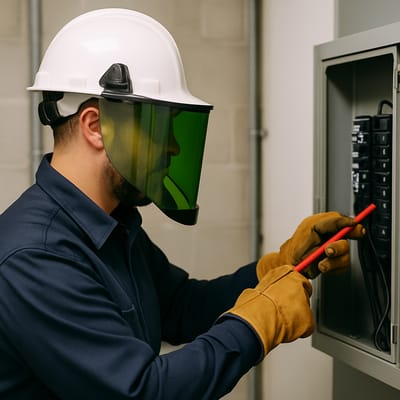
If you work on or near energized equipment where an arc is possible, you likely need arc‑rated head and face protection.
Typical roles
- Industrial/commercial electricians and maintenance techs
- Utility lineworkers and substation crews
- Switchgear operators, test technicians, and commissioning teams
- Data center and critical facility electricians
Common tasks
- Racking or operating circuit breakers and switching under load
- Testing/troubleshooting energized systems ≥50 V when de‑energizing isn’t feasible
- Opening panels, covers, or removing bolted connections inside arc flash boundaries
When an energized work permit and risk assessment indicate arc exposure, NFPA 70E requires appropriate PPE. After placing equipment in an electrically safe work condition and verifying absence of voltage, arc‑rated face protection may no longer be required; follow your written procedures. Don’t forget complementary protection: voltage‑rated gloves, hearing protection, and FR garments that meet the same or higher PPE Category as the head/face system.
How to choose the right arc flash helmet system
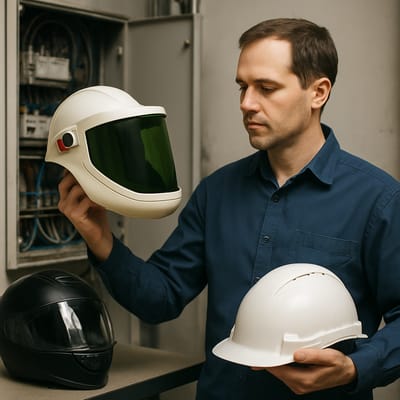
Start with the hazard, then match protection and usability.
Step‑by‑step selection
- Read the label/study: Note incident energy (cal/cm²) and working distance, or the required PPE Category.
- Pick the arc rating: Select a visor/hood with ATPV/EBT ≥ the incident energy (or category minimum: 4/8/25/40 cal/cm²).
- Confirm the hard hat: Choose ANSI/ISEA Z89.1 Class E; decide on Type I vs Type II based on lateral impact risk.
- Coverage and design: Lift‑front face shield vs integrated arc hood; ensure a chin cup and compatibility with a balaclava.
- Optics and comfort: Look for anti‑fog, anti‑scratch, wide field of view, and appropriate visible light transmission for your environment.
- Compatibility: Check fit with hearing protection, respirators, comms, and other PPE.
- Documentation: Verify labels for NFPA 70E, IEC 61482, and test method (e.g., ASTM F2178).
Budget for replacement parts (visors, suspensions) and consider user feedback during fit‑testing. Ready to spec your kit? Download the free Arc Flash Helmet Checklist to compare ratings, features, and fit—or request a quote from vetted suppliers.
Inspection, care, and replacement: make it last and stay safe
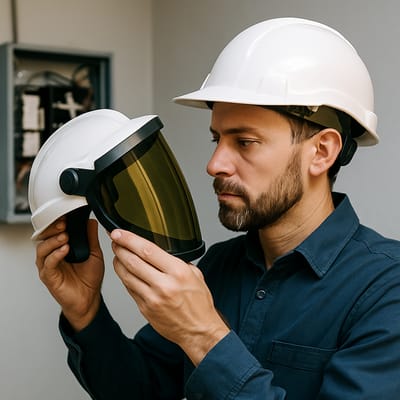
Proper maintenance keeps protection reliable and clear.
Routine care
- Inspect before use: Check the hard hat shell/suspension, visor, and chin cup for cracks, crazing, or clouding.
- Clean correctly: Use mild soap and water; avoid solvents that can damage polycarbonate visors or reduce arc performance.
- Dry and store: Air‑dry; store out of direct sunlight and away from chemicals and heat.
Periodic checks
- Verify labels for legibility and rating. Replace if labels fade or become unreadable.
- Review fit and suspension integrity; replace worn parts promptly.
- Document inspections and assign responsibility in your safety program.
Replacement triggers
- After any arc event, impact, or drop from height
- When visibility degrades (scratches/fogging you can’t remove)
- When manufacturer guidance indicates end of service life
Service life varies by product and exposure; follow the manufacturer’s instructions. Build a replacement schedule, keep spare parts on hand, and retrain users after any equipment or procedure change to ensure consistent, compliant protection.