Whitewater Helmets: Non-Brand Buying Guide 2026

Why the right whitewater helmet matters

Choosing the right whitewater helmet is the fastest way to boost your safety and comfort on the river. A proper, non-brand whitewater helmet can meet the same essential standards as pricier options—if you know what to look for.
What you’ll learn
- EN 1385: the key safety standard for paddling helmets
- Fit & sizing: how to get a secure, comfortable seal
- Materials: shell and liner choices that affect protection
- Features: ventilation, ear coverage, and retention systems
Common problems this solves
If your current helmet shifts, creates hot spots, or you’re unsure it’s protective enough, you’re not alone. We’ll simplify certifications, show how to size correctly, and highlight features that keep a whitewater helmet stable in moving water. By the end, you’ll be able to compare non-brand options confidently and pick a helmet that stays put, drains quickly, and protects against the bumps and bangs of regular river use.
Safety first: EN 1385 explained for paddlers

For whitewater use, look for EN 1385—the European standard for canoeing and white-water sports helmets. A whitewater helmet that meets EN 1385 is tested for impact attenuation (absorbing energy from hits), penetration resistance (protecting against sharp objects), retention strength (strap durability), and field of vision.
What coverage means
Good coverage protects the temples, sides, and back of the head without blocking vision or hearing. Many models offer half-cut (open ears) or full-cut (ear coverage) designs. Choose the style that fits your river, comfort, and communication needs.
Multi-impact reality
Whitewater knocks are frequent but often lower energy. Liners like EPP (expanded polypropylene) handle multiple smaller impacts better than EPS (expanded polystyrene), which is generally single-impact. Pair the right liner with solid shell construction and a reliable retention system to keep the helmet from rolling off. If a serious hit occurs or you see cracks, replace the helmet immediately—even if it’s EN 1385 certified.
Bottom line: an EN 1385 whitewater helmet with stable retention and appropriate coverage is the foundation of safe river running.
Get the fit right: sizing and adjustment

A correctly fitted whitewater helmet won’t wobble, pinch, or ride up in current. Follow these steps to dial it in.
Step-by-step sizing
- Measure your head circumference above the eyebrows and compare with the size chart.
- Consider head shape (round vs. oval). Some shells run rounder; others are more oval. Try both if possible.
- Use adjustment systems: dials or rear cradles and pad kits to fine-tune contact around the crown and temples.
Stability checks
- The whitewater helmet should sit one to two fingers above your brows.
- Tighten the Y-split straps so they meet just below the ears; buckle the chin strap so only one finger fits under it.
- Perform a shake test: look down, gently shake—no rolling or lifting. Open and close your mouth; the helmet should move slightly without discomfort.
Real-world fit tips
Test with your PFD collar, winter skull cap, or sunglasses you actually wear on the river. If you feel hot spots after 10 minutes, adjust pads or try a different internal shape. A secure, comfortable fit prevents distractions, reduces fatigue, and keeps protection where it belongs.
Materials and features that actually matter

Construction drives comfort, durability, and protection.
Shells and liners
- ABS: tough and durable; great value for frequent bumps.
- Polycarbonate: lighter with a smooth finish; good clarity for molded vents.
- Fiberglass/composites: lighter and stiffer at a higher price.
- EPP liner: better for multi-impact use in whitewater.
- EPS liner: stronger single-impact absorption; replace after a hard hit.
Comfort and control
- Ventilation & drainage: well-placed ports reduce heat and shed water fast.
- Retention systems: rear cradles, dials, and robust webbing keep a whitewater helmet stable in turbulence.
- Ear coverage: half-cut for airflow and hearing; full-cut for warmth and side impact protection.
- Padding: moisture-wicking, quick-dry, and removable pads simplify cleaning and fit tuning.
- Hardware: corrosion-resistant rivets and buckles handle wet cycles.
Prioritize a non-brand whitewater helmet that balances coverage, liner type, and retention. If you regularly surf holes or run pushy rivers, stability and multi-impact liners usually outrank ultra-low weight.
Quick buying checklist and care tips
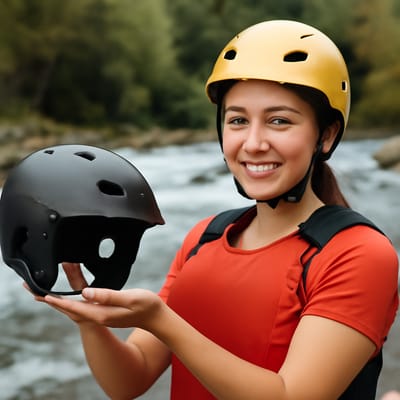
Use this checklist to compare non-brand options before you buy.
Pre-purchase checklist
- EN 1385 certification label present
- Coverage: temples, sides, and occipital area protected
- Liner: EPP for multi-impact or EPS for stronger single hits
- Retention: stable rear cradle/dial + secure chin buckle
- Venting & drainage that match your climate and river style
- Fit: passes shake test with PFD on; no hot spots after 10 minutes
- Replaceable pads and corrosion-resistant hardware
Care and replacement
- Rinse after sessions, especially silty water; air dry out of direct sun.
- Avoid high heat (car dashboards); heat can degrade liners and shells.
- Inspect for cracks, compressed foam, frayed straps, or broken buckles.
- Replace after any serious impact or every 3–5 years, whichever comes first.
Ready to choose? Shortlist two or three non-brand whitewater helmet models that meet the checklist, then pick the one that fits best. Want a printable version? Join our newsletter to get a one-page Sizing & Safety Checklist you can take to the shop or use at home.