Motocross Helmet Buying Guide: Size, Fit, Comfort 2026
Why size, fit, and comfort matter off‑road
A well-chosen motocross helmet isn’t just safer—it keeps you focused and less fatigued on rough terrain. The wrong motocross helmet size can cause hot spots, headaches, and distraction, while poor ventilation leads to heat buildup and fogged goggles. Get size, fit, and comfort right, and you’ll ride longer with better control. This quick guide shows how to measure, test fit, and evaluate comfort features so your MX helmet works with your body and your goggles.
What’s at stake
- Impact protection depends on a stable fit that won’t rotate or roll off.
- Energy and focus improve when pressure points and weight are managed.
- Goggle seal stays consistent when the eyeport and strap channel match your goggles.
What you’ll learn
- How to measure for the correct motocross helmet size and identify head shape.
- Practical fit tests to confirm a secure MX helmet feel.
- Comfort upgrades: vents, liner materials, weight, and hydration-friendly features.
Dial in these essentials before comparing graphics or extras; safety and comfort should lead your decision.
How to find your motocross helmet size (3 steps)
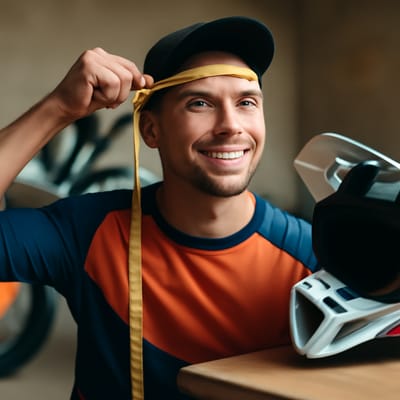
Getting the right motocross helmet size starts with a tape measure and five minutes.
Step 1: Measure correctly
Wrap a soft tape around your head, 2–3 cm above the eyebrows and over the largest part at the back. Record in centimeters—most size charts use cm.
Step 2: Match size + head shape
Use the brand’s size chart to pick your starting size. Then consider head shape: round oval, intermediate oval (most common), or long oval. If your MX helmet feels tight on the forehead but loose at the sides, you likely need a longer-oval option.
Step 3: Choose the snugger option
Between sizes? Choose the snugger. EPS doesn’t break in, but pads compress about 5–10% over 10–20 hours. Cheek pads should feel firm—like a gentle squeeze—without pinching.
Pro tips:
- Keep the strap fastened when testing size.
- Wear your usual base layer/balaclava.
- If needed, adjust with different cheek pad or crown liner thicknesses for a custom-like fit.
How should an MX helmet fit? Simple tests
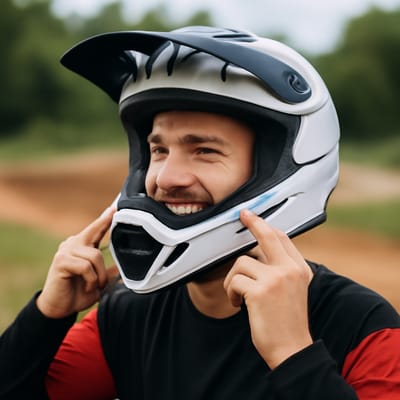
Once you’ve picked a motocross helmet size, confirm the fit with quick checks.
Core fit checks
- Crown contact: Even pressure around the top with no hard hot spots.
- Cheek pad seal: Firm contact; you can’t bite the inside of your cheeks.
- Rotation test: With the strap snug, twist the helmet side to side. Your scalp should move with it.
- Roll‑off test: Pull up and forward from the rear. A properly fitted MX helmet stays planted.
15‑minute rule
Wear it indoors for 15 minutes. Persistent pain on the forehead, temples, or behind ears signals the wrong shape or size.
Strap and field of view
- Retention: Double D‑ring is race‑approved; micrometric buckles are convenient for trail use.
- Vision: You should see clearly in riding posture with room for goggles and a breath guard.
If any test fails, try a different head shape or adjust pad thickness. Comfort is non‑negotiable; pressure points will only worsen on bumpy trails.
Cooling and comfort: vents, weight, and liners

Heat and sweat sap energy fast. Prioritize ventilation, weight, and liner tech in your motocross helmet.
Ventilation that actually works
Look for a large chin bar intake with dust filter, brow/forehead intakes, and exhaust ports aligned to internal channels. Closable vents help in cold weather. Pair with moisture‑wicking foam in your goggles to keep the seal dry.
Weight and balance
A lighter MX helmet (about 1250–1500 g) reduces neck fatigue, but balance matters too. Even weight distribution prevents the “front‑heavy” feel that strains your neck on descents.
Liners and hygiene
- Moisture‑wicking, antimicrobial liners keep skin drier.
- Fully removable/washable pads simplify post‑ride cleanup.
- Emergency cheek‑pad release is a smart safety upgrade.
Small details—like a nose guard that directs breath away from goggles or a hydration‑tube port—add comfort on long rides. Try your full setup (goggles, balaclava, hydration) before you buy.
Certifications, goggles, and buying tips
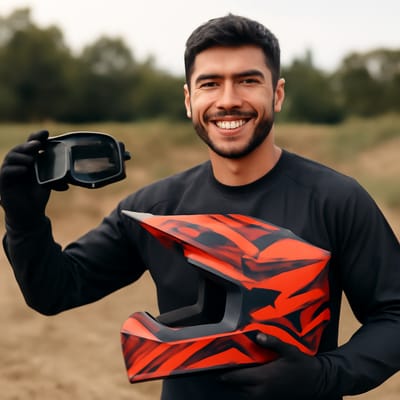
Don’t trade safety for comfort. Choose a motocross helmet with credible certifications: ECE 22.06 (EU), DOT FMVSS 218 (US), or Snell M2020D/M2020R for higher‑tier impact testing. Off‑road shells should have a strong peak, wide eyeport, and robust chin bar.
Goggle compatibility checklist
- Eyeport fits your goggle frame without gaps.
- Strap sits in the rear channel and doesn’t ride up.
- Nose bridge isn’t pinched; breath guard clears the goggle.
Quick buying framework
| Tier | Shell/Features | Safety | Vents/Liner | Best for |
|---|---|---|---|---|
| Budget | polycarbonate | DOT/ECE | basic vents, washable liner | new riders |
| Mid‑range | composite mix | ECE/Snell options | multi‑channel, moisture‑wicking | frequent trail |
| Premium | fiberglass/carbon | ECE + Snell | advanced flow, emergency release | racing/enduro |
Finalize with a 15‑minute wear test and full gear try‑on. When your motocross helmet passes fit checks, matches your goggles, and meets a trusted standard, you’re ready to buy with confidence.