Neck Airbags: How They Protect Riders - Guide 2025
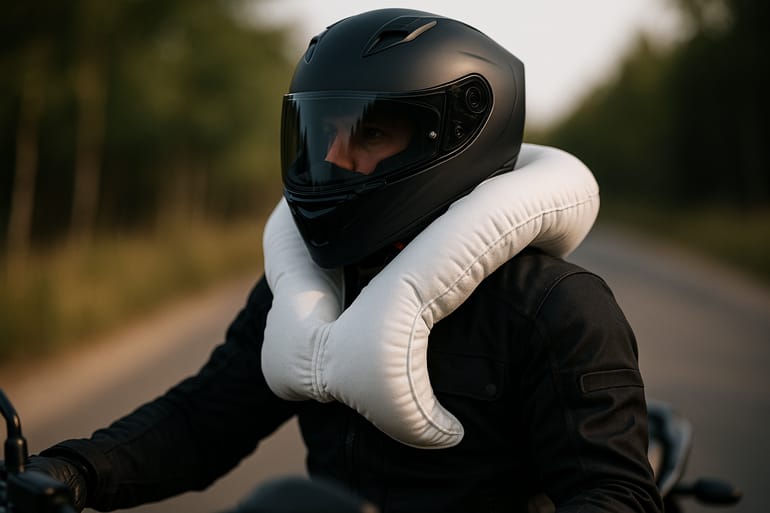
What is a neck airbag and why does it matter?
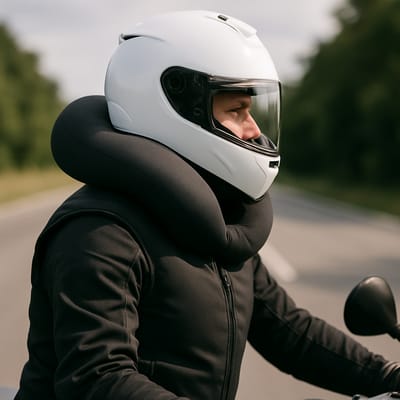
The essentials
A neck airbag is an inflatable safety system that surrounds the neck, upper chest, and collarbone area to stabilize the cervical spine during a crash. Unlike passive armor, a neck airbag rapidly inflates to create a temporary, energy‑absorbing buffer that reduces whiplash, hyperextension, and lateral bending. You’ll see it built into vests, jackets, or collar modules that sit comfortably over your riding layers.
Why riders use it
- Helps keep your head and helmet aligned with the spine
- Shields the clavicles and upper chest from direct impacts
- Reduces rotational forces that can aggravate neck injuries
How this guide helps
In the next sections you’ll learn how a neck airbag detects a crash, how it complements your helmet (including lightweight carbon options with 3K weave), and how to choose the right fit and activation system. You’ll also get simple upkeep tips so your gear stays ready to deploy. If you’re upgrading protection beyond a standard back protector, a neck airbag adds a crucial layer of active safety while remaining light, breathable, and comfortable for daily rides.
How does a neck airbag work during a crash?
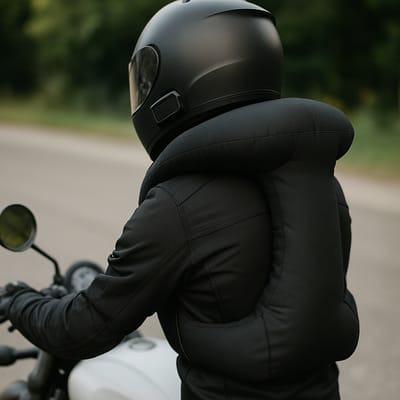
Detection and deployment
A neck airbag uses either a mechanical tether or electronic sensors (IMU, gyroscope, accelerometer) to identify a crash. When thresholds are met, a gas canister inflates the bladders in roughly 30–60 ms, creating a firm horseshoe around the neck and upper torso. That speed is key: it aims to stabilize the head‑to‑torso relationship before peak impact.
What it protects
- Supports the cervical spine to limit hyperflexion and hyperextension
- Stabilizes the helmet to reduce rotational forces
- Cushions collarbones and upper ribs from direct hits
- Helps maintain airway alignment during the initial impact phase
Standards and construction
Look for designs tested to relevant PPE norms, such as EN 1621‑4 for inflatable protectors and garment certifications that verify abrasion seams and burst strength. Multi‑chamber layouts spread pressure evenly, while multi-density inserts guide the airbag’s shape after inflation. In everyday terms, the neck airbag buys time and space: by stiffening the collar area, it helps your helmet and core armor do their jobs more effectively. Used correctly, a neck airbag becomes a proactive safety layer that addresses the neck—one of the most vulnerable areas in a motorcycle crash.
Neck airbag vs helmet: how do they complement?

Different roles, shared goal
Your helmet absorbs and disperses impact energy at the head; a neck airbag stabilizes the head‑to‑torso connection. Together, they reduce peak loads to the brain, cervical spine, and collarbones.
Why pairing matters
- A certified ECE 22.06 helmet manages linear and angular impacts
- A neck airbag resists extreme head tilt and rotation
- Combined, they help keep your visual line stable for secondary hazards
Carbon fiber synergy
If you ride with a lightweight carbon helmet—often using a 3K weave for stiffness‑to‑weight—reduced mass lessens neck fatigue, while the neck airbag adds event‑specific support during a crash. The lighter helmet lowers inertial forces, and the airbag counters sudden motion. It’s a complementary package: everyday comfort plus event‑driven stabilization.
Fit and compatibility tips
Ensure the collar height of the neck airbag doesn’t interfere with your helmet’s lower edge or the jacket’s collar. Sit on your bike, look over each shoulder, and do full up‑and‑down checks. If the airbag touches the helmet at rest, sizing or adjustments may be off. Worn correctly, a neck airbag and helmet operate independently during normal riding, but function as an integrated safety system when seconds count.
How to choose the right neck airbag for you
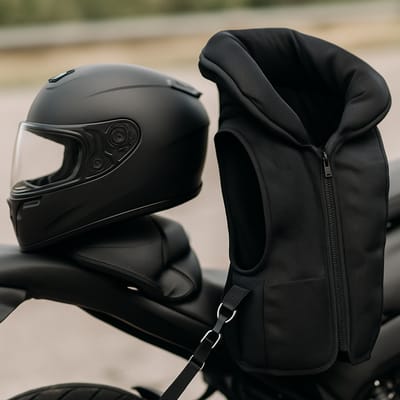
Activation types
- Tethered: Simple, no batteries; connect a lanyard to the bike. Reliable and cost‑effective, but only deploys if you separate from the bike.
- Electronic: IMU‑driven detection with potential low‑side/high‑side recognition. Needs charging and occasional updates.
Fit and coverage
Measure chest and torso; follow the brand’s size chart for a close yet comfortable fit. The neck airbag should sit flat over your jacket, with room for inflation around the thorax and collarbones. Check that the inflated collar height won’t jam under your helmet.
Standards and build
Look for EN 1621‑4 testing for inflatable protectors and robust stitching, abrasion panels, and secure closures. Multi‑chamber bladders and multi-density guidance panels improve shape control during deployment.
Compatibility
- Works over most textile or leather jackets
- Ensure clear path for inflation (no rigid accessories at the collar)
- Verify room under backpack straps and hydration tubes
Quick checklist
Sizing, activation type, certification, rearming cost, battery life (if electronic), ventilation, and visibility elements. Choose a neck airbag that balances daily comfort with event‑specific protection so you’ll actually wear it on every ride.
Care, rearming, and real‑world use tips
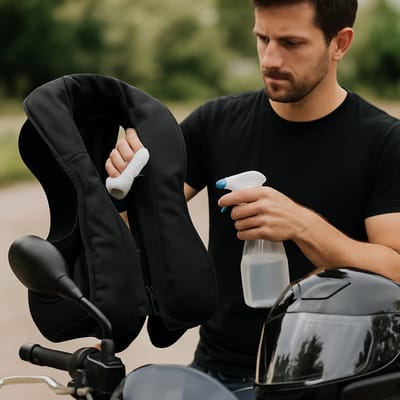
Routine care
Wipe the outer shell with mild soap, air‑dry, and avoid harsh solvents. For electronic systems, keep firmware current and charge regularly. Inspect seams, covers, and the gas canister area monthly so your neck airbag is always ready.
After deployment
- Power down (if electronic) and check for warnings
- Replace the gas cartridge or send for service per the manual
- Inspect bladders, seams, and fasteners before next ride
Rearming costs and steps vary; plan ahead by keeping a spare cartridge or scheduling service time.
Fit checks and packing
Do a quick pre‑ride test: close all fasteners, connect the tether (if used), and confirm free neck rotation with your helmet. When traveling, store the neck airbag flat, away from heat, and never compressed for long periods; it can crease bladder channels.
Ride smarter
Layer thoughtfully in winter so fabric bulk doesn’t restrict inflation. In summer, prioritize ventilation zones and light colors. A well‑maintained neck airbag turns into quiet insurance—unobtrusive when you don’t need it and decisive in the split second you do.