Best MTB Helmets for E-Bikes: Comparison Guide 2026
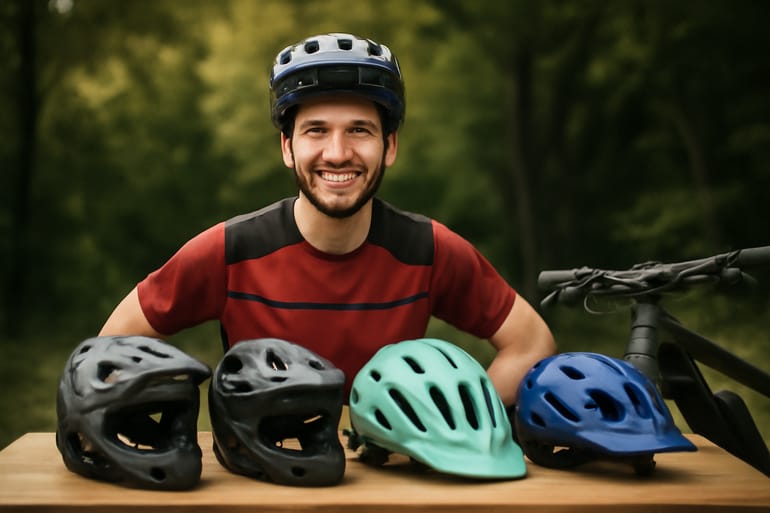
Which MTB helmets suit e-bike riders best?

Choosing MTB helmets for e-bikes can feel tricky: higher average speeds, longer climbs, and heavier bikes change your risk profile. The best e-bike MTB helmets balance coverage, ventilation, and certification so you stay cool on climbs and protected on faster descents.
Why e-bikes change the equation
- More speed, more momentum: Heavier bikes carry energy into crashes, so extended temple and occipital coverage matters.
- Longer ride time: Motor assistance encourages bigger days; you’ll want superior ventilation to avoid overheating.
- Mixed terrain: From urban connectors to technical trails, flexible visor and eyewear compatibility help across conditions.
Key selection priorities
- Safety labels that match your riding (EN1078/CPSC for general MTB, NTA 8776 for high‑speed e-bikes, ASTM for bike‑park use).
- The right style for terrain: half‑shell for trail, full‑face for bike parks, convertible for big-mountain rides.
- Comfort factors: weight around 300–380 g for airy half‑shells; 600–900 g for full‑face. Look for rotational impact systems, secure retention dials, and easy‑wash pads.
By the end of this guide, you’ll know how to compare e‑bike MTB helmets by certification, helmet type, and feature set—so you can buy with confidence.
Which safety certifications matter for e-bikes?

Helmet standards aren’t one-size-fits-all. Matching your certification to your e‑MTB use eliminates guesswork and ensures the protection you expect.
Core standards to know
- CE EN1078 (EU) / CPSC (US): Baseline road/MTB standard. Good for most trail rides.
- NTA 8776: E‑bike/speed‑pedelec standard tested for higher impact energy (up to ~45 km/h use). Typically adds more coverage and thicker EPS.
- ASTM F1952: Downhill standard with tougher impact tests and chin‑bar requirements; relevant for bike‑park days and aggressive enduro.
How to apply them
- Mostly trail, Class‑1/2 e‑MTB: EN1078 or CPSC, plus a rotational impact feature.
- Fast commuting or speed‑pedelec segments: Prioritize NTA 8776.
- Park laps or gnarlier terrain: Consider ASTM F1952 (full‑face) or at least a robust trail lid.
Check the certification label inside the liner or on the packaging. Multiple labels can indicate broader testing, but buy for your primary use. If in doubt between two models, choose the option with higher‑energy testing (e.g., NTA 8776) for e‑bike mileage.
Half-shell, full-face or convertible: what to pick?

Your helmet type should track with terrain, speed, and confidence level.
Half‑shell (trail)
- Pros: Excellent ventilation, lowest weight, great for long e‑MTB climbs and everyday trail rides.
- Cons: Less facial protection; not ideal for bike‑park laps.
- Look for: Deep rear coverage, sturdy visor, and rotational impact tech.
Full‑face (enduro/downhill)
- Pros: Chin‑bar protection, often ASTM F1952 rated; best for parks and steep terrain.
- Cons: Heavier and warmer; plan hydration and breaks.
- Look for: Big intake/exhaust ports, removable cheek pads, breakaway mounts.
Convertible (removable chin‑bar)
- Pros: One helmet for climbs and descents—trail comfort with downhill confidence.
- Cons: Added weight/complexity; verify chin‑bar secures firmly.
- Look for: Tool‑free conversion, certified chin‑bar, stable retention system.
If your rides mix long fire‑road climbs with technical descents, a convertible lid is a smart, budget‑friendly way to cover two use cases. Pure trail riders will love a light half‑shell; park‑focused riders should stick with a full‑face.
Ventilation, weight, visors and tech: what really counts?

Comfort keeps you riding longer—and safer. E‑MTB days run hot, so airflow and stability are essential.
Ventilation and weight
- Look for wide front intake ports and clean internal channels. A good trail lid lands around 300–380 g; full‑faces often 600–900 g.
- Hot climates: prioritize larger vents and light colors to reduce heat.
Visor and eyewear
- Adjustable visor lets you park goggles during climbs and shields low sun. Ensure clearance for glasses or goggles without pressure points.
Impact and fit tech
- Choose rotational impact protection (slip‑plane or similar).
- A precise micro‑dial retention system stabilizes the helmet on rough descents.
- Removable, moisture‑wicking pads simplify cleaning after long e‑bike rides.
Mounts and practicality
- Breakaway camera/light mounts reduce snag risk.
- Reflective accents improve dusk visibility on connectors back to the trailhead.
Prioritize the features you’ll feel every ride: cool airflow, stable fit, and modern impact tech. A quieter, cooler helmet helps you focus when speeds pick up on an e‑bike.
Best options by style and budget: a quick shortlist

Here’s how to spot the best value in e‑bike MTB helmets—without chasing brands.
Trail/all‑mountain (half‑shell)
- Under $120: EN1078/CPSC, deep back coverage, basic rotational tech, 12–18 vents.
- $120–$250: Lighter shells, upgraded fit dials, antimicrobial pads, 18–24 vents.
- $250+: Premium ventilation, refined airflow acoustics, lighter composites.
Enduro/bike‑park (full‑face)
- Under $200: Solid ABS shells, ASTM F1952 optional, removable pads.
- $200–$400: Better ventilation, lighter shells, verified ASTM F1952.
- $400+: Carbon‑blend shells, superior padding, emergency‑release cheek pads.
Speed‑pedelec/fast commuting
- Prioritize NTA 8776, reflective details, and robust lower‑temple coverage.
Fit first—always
- Measure head circumference and check the brand’s size chart.
- Aim for snug, even contact; no hotspots; minimal fore‑aft movement.
- Dial retention until two‑finger strap gap under the chin feels secure.
When you’re ready, compare size availability and certifications on product pages, then pick the model that best matches your terrain, speed, and budget.