E-MTB Helmet Certifications: Safety Buying Guide 2026
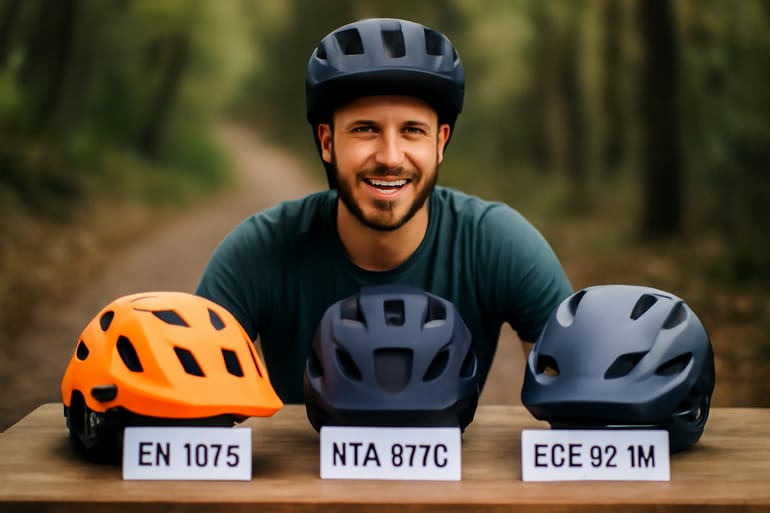
Why do E‑MTB helmet certifications matter?

E‑MTB helmet certifications are your quickest proof that a lid meets verified safety benchmarks. For electric mountain biking, extra weight and higher average speeds can raise crash energy, so choosing the right standard isn’t just a box‑tick—it’s real‑world protection. In the UK, most pedal‑assist bikes (EAPCs) top out at 15.5 mph (25 km/h), where EN 1078 bicycle helmet compliance is the baseline. If you ride harder terrain or spend time on fast road transfers, you may want added coverage standards designed for higher impacts. Beyond the label, look for modern rotational impact protection systems, multi‑density EPS foam, and extended rear coverage—features that better manage oblique hits common in off‑road falls.
In this guide we’ll explain the key E‑MTB helmet certifications you’ll see—EN 1078, NTA 8776, ASTM F1952 (downhill MTB), and when ECE 22.06 (motorcycle) becomes relevant in the UK. You’ll learn which standard fits your riding, how to trade off safety vs ventilation for long climbs, and whether a full‑face or trail lid is the smarter buy. By the end, you’ll know exactly what to check on the label, how it should fit, and the quick tests to perform before you hit “add to basket.”
Which standards apply for UK E‑MTB riding?
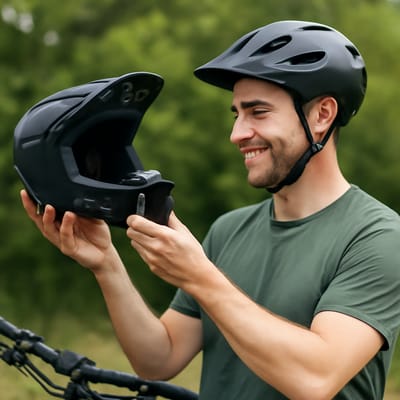
Choosing the right E‑MTB helmet starts with understanding the labels you’ll find inside the shell or on the strap.
- EN 1078 (CE/UKCA): The core standard for bicycle helmets across the UK/EU. Suitable for most trail, XC, and general e‑MTB use up to 25 km/h (15.5 mph). Look for a CE or UKCA mark alongside EN 1078 on the label.
- NTA 8776: A Dutch‑origin standard for speed e‑bikes. It specifies higher impact energy and increased temporal/occipital coverage. Ideal if you frequently ride fast commutes, heavy cargo e‑bikes, or do long, quick road transfers on your e‑MTB. It’s not legally required in the UK for EAPCs, but it’s added assurance for higher‑speed use.
- ASTM F1952: Downhill MTB. Often seen on full‑face helmets, indicating tougher impact criteria than EN 1078, especially for aggressive gravity riding.
- ECE 22.06: Motorcycle standard. In the UK, speed‑pedelecs (approx. 45 km/h) are typically classified as mopeds, which require a certified motorcycle helmet. Check local regulations if you ride an S‑pedelec.
Quick pick guide:
- Mostly trail under 25 km/h → EN 1078.
- Faster on‑road transfers/utility riding → NTA 8776.
- Bike‑park/enduro and steep descents → ASTM F1952 full‑face.
- S‑pedelec/legal moped use → ECE 22.06 motorcycle helmet.
When in doubt, verify the exact marking in the product photos or ask the retailer.
Safety tech vs comfort: how do you balance both?
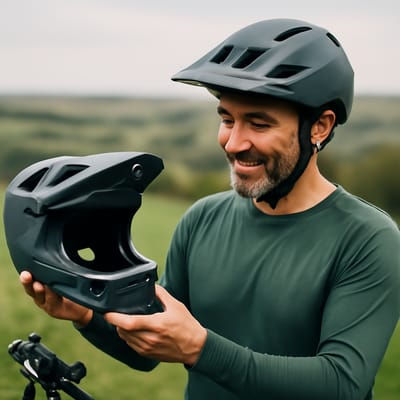
A safe E‑MTB helmet should also be comfortable for long climbs and changeable UK weather. Start with the shell and liner: multi‑density EPS spreads different impact energies, while in‑mold shells improve integrity without adding much weight. Modern rotational impact protection layers allow slight slip between helmet and head to reduce rotational forces in angled crashes—key for off‑road falls.
Comfort matters for focus and stamina:
- Ventilation: Large, well‑placed intake and exhaust ports with internal channels move air over your scalp. Test by riding at modest speed; you should feel airflow even on gentle gradients.
- Weight and balance: Heavier lids (often full‑face) can strain your neck on all‑day rides; balance and low center of mass help.
- Fit system: A precise, micro‑adjust dial secures the helmet low on the occipital bone. Combine with multiple pad thicknesses to eliminate hot spots.
- Coverage: Trail lids with extended rear coverage protect the back of the head without sacrificing too much cooling; NTA 8776 models often add deeper temporal coverage.
Your goal is a helmet that meets the right certification for your speeds and terrain, while delivering cooling, light weight, and a stable fit you’ll actually wear for hours.
Full‑face or trail lid: what’s safer for E‑MTB?

It depends on terrain, speed, and how you crash. Full‑face helmets protect the jaw and face, making them popular for enduro stages, bike‑park laps, and steep e‑MTB descents. Look for ASTM F1952 certification to signal downhill‑grade impact protection; it pairs well with aggressive tyres and higher e‑MTB system speeds on technical tracks. Downsides are extra heat and weight. Some riders opt for convertible models with a removable chin bar for climb‑up/descend‑down versatility.
Trail lids (half‑shell) are light, highly ventilated, and great for all‑day pedalling. For typical UK EAPC use, EN 1078 compliance is appropriate. If you routinely mix fast urban transfers or heavier bikes at speed, consider a deeper‑coverage NTA 8776 option.
Quick decision guide:
- Steep tech, big features, bike parks → Full‑face (ASTM F1952).
- Flow trails, mixed bridleways, under 25 km/h → Trail (EN 1078).
- Mixed riding with occasional gnarly descents → Convertible full‑face.
Whichever style you choose, pair certification with rotational protection, a secure fit, and a visor that doesn’t block sightlines on steep roll‑ins.
Fit, sizing and quick checks before you buy
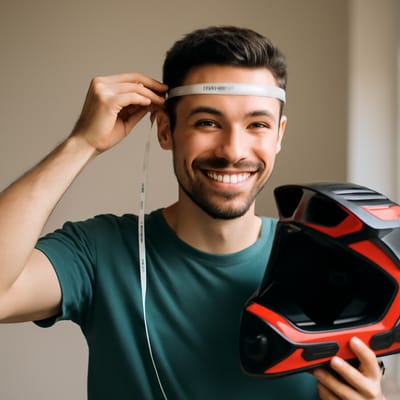
A certified label won’t help if the helmet doesn’t fit. Follow these steps:
- Measure your head circumference above the eyebrows and compare to the brand’s size chart.
- Try on: even pressure all around, no hotspots. Shake your head; the shell shouldn’t rock independently.
- Dial fit: snug the micro‑adjust until secure, then check you can still chew comfortably.
- Straps: the Y should cradle your ears; with the chin strap closed, you should fit one to two fingers underneath.
Do these quick checks:
- Certification label visible (e.g., EN 1078, NTA 8776, ASTM F1952, or ECE 22.06 where appropriate) with CE/UKCA marking for the UK market.
- Field of view clear in attack position; visor doesn’t block when looking up.
- Goggle/sunglass compatibility and no hot spots from temple arms.
- Reflective accents or light mounts if you ride at dawn/dusk.
Replace any helmet after a crash or every 3–5 years due to foam ageing. Ready to choose? Compare top‑rated trail, NTA 8776, and full‑face options in our buyer’s guide, join our newsletter for a printable fit checklist, and watch our video reviews before you click buy.